Home Gutter Cleaning Roof Cleaning Pressure Washing Locations About Blog Free Quote
Home Locations Roof Cleaning York
York & surrounding villages Conservation Area Safe IPAF Certified

York’s roofs deserve better than a pressure washer.

York has more conservation areas, listed buildings and period rooflines per square mile than almost anywhere in Yorkshire. A pressure washer doesn’t care about any of that. I clean York roofs by hand — scraping moss tile by tile, then treating with biocide so it stays clean for years. No water damage, no stripped tiles, no shortcuts.

Written by Richard, IPAF-certified roof cleaning operator — 700+ jobs across Yorkshire. .

£4–£8 per m² · biocide from £2/m² · no VAT

Why York roofs grow moss faster — and why it matters more here than most places.

York sits in the Vale of York — low-lying, sheltered and damp. The Ouse and the Foss keep humidity high year-round. Mature trees lining the streets in Bishopthorpe, The Mount, Bootham and Clifton drop shade and organic matter onto roofs from March through November. North-facing pitches in Heworth and South Bank can accumulate a thick moss layer within two to three years of a clean.

That wouldn’t be a problem if the roofs were all modern concrete. But York has one of the highest concentrations of heritage roofing in the north. Victorian clay plain tiles in The Groves and Bootham. Edwardian rosemary tiles in Acomb and Holgate. Handmade clay on listed properties inside the city walls. Early concrete interlocking tiles on the 1930s semis in Haxby and Strensall. Every one of these is vulnerable to pressure washing in a different way.

Manual scraping with hand tools removes moss without disturbing the tile surface, mortar bedding or flashing laps. It’s slower. It costs about the same. But your roof comes out of it with its protective surface intact and its lifespan extended rather than shortened. That’s the trade-off I think every York homeowner should understand before hiring anyone.

What I see on York roofs, area by area.

Every part of York has its own roof stock and its own moss problems. Here’s what I typically find.

Bishopthorpe & Copmanthorpe

YO23 · Detached & semi-detached

Large-footprint roofs, often with multiple hips and valleys. Mature gardens mean heavy organic debris and accelerated moss growth. Many properties have concrete interlocking tiles from the 1960s–80s with worn granular surfaces that trap moisture. These roofs tend to need a full day’s work and respond very well to biocide treatment.

The Groves & Bootham

YO31 · Victorian terraces & villas

Some of the oldest domestic rooflines in York. Victorian clay plain tiles are common — thin, brittle when aged, and absolutely must not be pressure washed. Many properties are in conservation areas or directly listed. Manual scraping is not just preferred here, it’s the only safe option. North-facing rear pitches see heavy moss; south-facing front pitches stay cleaner longer.

Haxby & Strensall

YO32 · 1930s–60s housing & modern estates

A mix of inter-war semis with early concrete tiles and modern estates with thinner modern interlocking tiles. The older tiles here are often showing their age — surface granules worn, moss getting a foothold in every crevice. Pressure washing accelerates the decay. Manual scraping preserves what’s left of the surface and buys years of life. Newer estates still benefit from biocide to prevent moss establishing in the first place.

Acomb & Holgate

YO24 · Edwardian semis & terraces

Acomb’s Edwardian-era housing stock often features rosemary tiles — small, flat, nibed tiles with a distinctive warm colour. These are still in good condition on many properties but are easily damaged by high-pressure water. Holgate’s terraces have similar period roofing. Moss growth is moderate due to the relatively open streetscape, but north-facing pitches still accumulate heavily and benefit from a 3–5 year cleaning cycle.

Fulford & Heslington

YO10 · Mixed period & modern

Fulford has a real mix — Victorian villas along Fulford Road, 1960s housing in the side streets, and newer builds near the university. The older properties close to the river see the worst moss due to proximity to the Ouse and dense tree cover along the banks. Several properties on Main Street are listed or in the conservation area. I adjust my approach tile by tile depending on what’s on the roof.

Clifton & Rawcliffe

YO30 · 1950s–80s estates

Mid-century housing with a lot of concrete interlocking tile roofs. Rawcliffe’s 1970s–80s estates are at the age where moss has had decades to establish itself deep into the tile laps. These roofs clean up well with manual scraping and respond brilliantly to biocide — often the best transformation of any roof type. Clifton’s older houses closer to Bootham trend more Victorian and need the same care as The Groves properties.

Why manual scraping is the only safe option for York’s roof stock.

A lot of roof cleaning companies in the York area lead with a pressure washer. It’s faster for them, and the before/after looks dramatic. But the damage is invisible until your next winter — stripped tiles absorb water, freeze, crack. Mortar joints that were fine before now let water in. On a York roof that might be 80 or 100 years old, that’s a repair bill that dwarfs the cost of a proper clean.

Pressure Washing
Strips protective tile surface
Forces water under flashings
Risks damage to listed buildings
Moss returns within 12 months
Manual Scraping + Biocide
Preserves tile integrity
No water ingress risk
Conservation area safe
Clean lasts 2–4 years
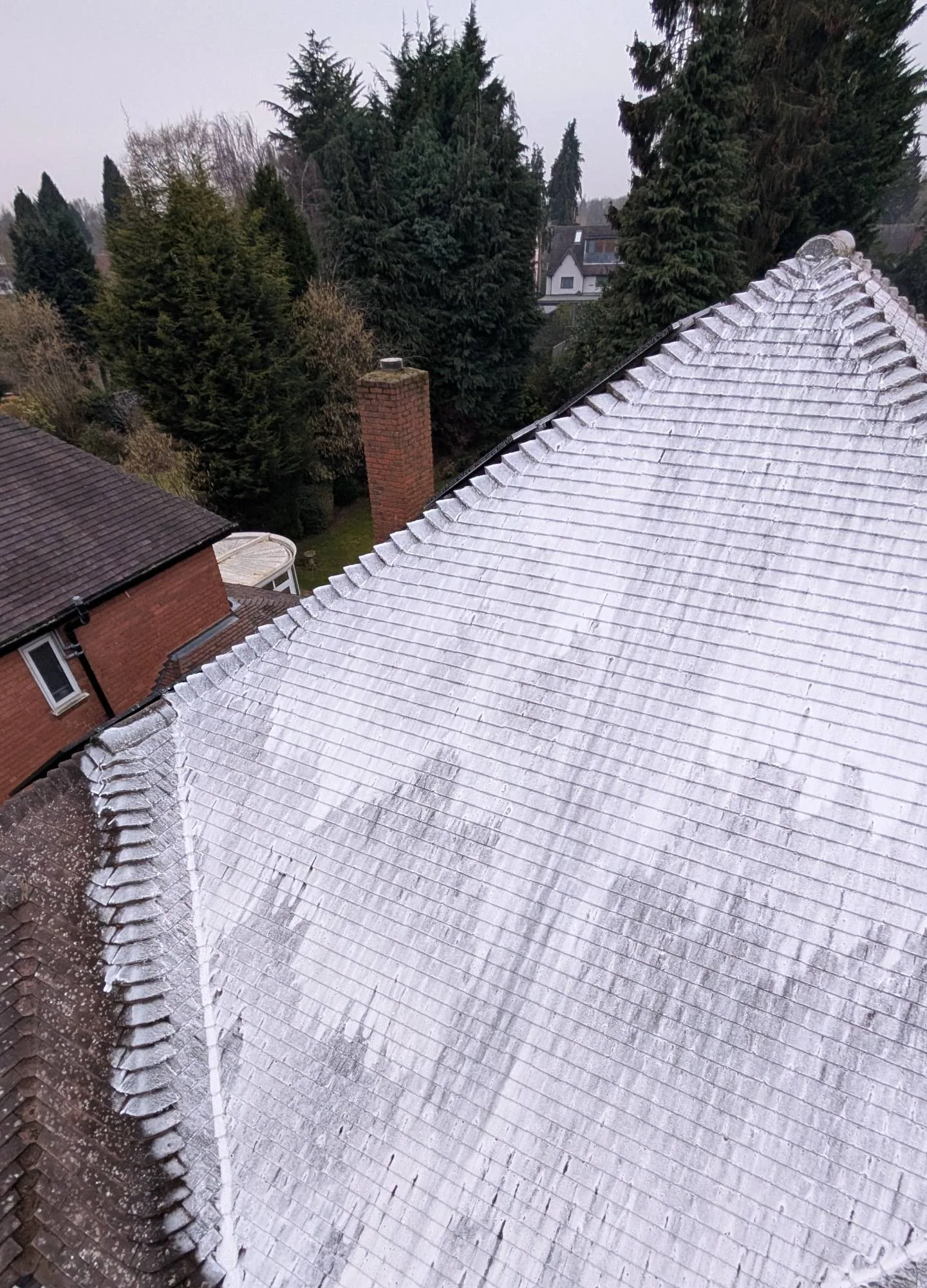
Manual roof moss removal on a York period property by Hugo’s

How much does roof cleaning cost in York?

Typical ranges by property type. Final price depends on roof pitch, access and moss coverage. No VAT.

Property type Typical roof area Scraping + Biocide
2-bed Victorian terrace (The Groves, Holgate) 40–55 m² £180–£280 +£80–£120
3-bed Edwardian semi (Acomb, Haxby) 55–80 m² £260–£380 +£110–£165
4-bed detached (Bishopthorpe, Strensall) 80–120 m² £350–£550 +£160–£240
Large Victorian villa (Bootham, The Mount) 120 m²+ £500+ +£240+

Includes gutters cleared of fallen moss and before & after photos. Get a free quote →

Four steps. No drama.

1

Quote from your address

Send me your postcode. I assess roof size, pitch and access from map imagery and send a price — usually within the hour.

2

Inspect & photograph

On site, I inspect the tile type and moss severity before touching anything. Before photos taken and sent to you.

3

Scrape & treat

Moss removed by hand, debris cleared from gutters, biocide applied to kill remaining spores and inhibit regrowth for 2–4 years.

4

After photos & pay

After photos sent. You pay only when you’re happy with the result. Bank transfer or cash — no VAT.

Roof cleaning across York and the surrounding villages.

I cover York city and all surrounding villages. Same pricing, same standard of work everywhere.

York City Centre Bishopthorpe Copmanthorpe Haxby Strensall Acomb Holgate Huntington Fulford Heworth Clifton Rawcliffe Heslington Dunnington Skelton Earswick

Covering YO1, YO10, YO23, YO24, YO26, YO30, YO31, YO32 postcodes

Questions about roof cleaning in York.

The things people actually ask before booking. If yours isn’t here, ring me.

07356 248558

Yes. Manual scraping is the safest method for conservation areas because there’s no high-pressure water involved — no risk of water ingress through historic mortar joints and no damage to original tile surfaces. I regularly work on properties within York’s conservation zones including The Mount, Bootham and Bishophill. No planning permission is needed for cleaning — only for replacing tiles or altering the roofline. If your property is listed, manual scraping is even more important because pressure washing could constitute damage under the listing protections.

Roof cleaning in York starts from £4 per m² for manual moss scraping, with biocide treatment from £2 per m². A typical York terrace (40–55 m²) costs £180–£280 for scraping. A three-bed semi in Acomb or Haxby runs £260–£380. Larger detached properties in Bishopthorpe or Strensall from £400–£700+ depending on roof area, pitch complexity and access. I can usually give an accurate estimate from your postcode alone.

York has a particularly high proportion of older tile types that were never designed to withstand 3,000 PSI water jets — handmade clay, rosemary tiles and early concrete interlocking tiles. Pressure washing strips the granular surface that protects tiles from water absorption, forces water through mortar joints and flashing laps, and can crack tiles on the spot. Manual scraping removes the moss without touching the tile surface underneath. It’s slower, but your roof survives intact — which matters when sourcing replacement tiles for a 1920s Marley or a Victorian clay plain tile is expensive and often impossible.

Yes — I cover all of York and the surrounding villages. Haxby, Strensall, Huntington, Earswick, Skelton, Clifton Moor, Acomb, Copmanthorpe, Bishopthorpe, Fulford, Heworth and Dunnington are all within my regular working area. Same pricing, same standard of work. I’m based in Skipton and travel to York regularly — it’s about 50 minutes door to door. Get in touch with your address and I’ll turn a quote around quickly.

While I’m up there…

Most people combine a roof clean with a gutter clear. Makes sense — all the moss I scrape ends up in them anyway.

Need a roof clean in York?
Get your free quote.

Send me your York postcode and I’ll quote from map imagery — usually within the hour. No obligation.