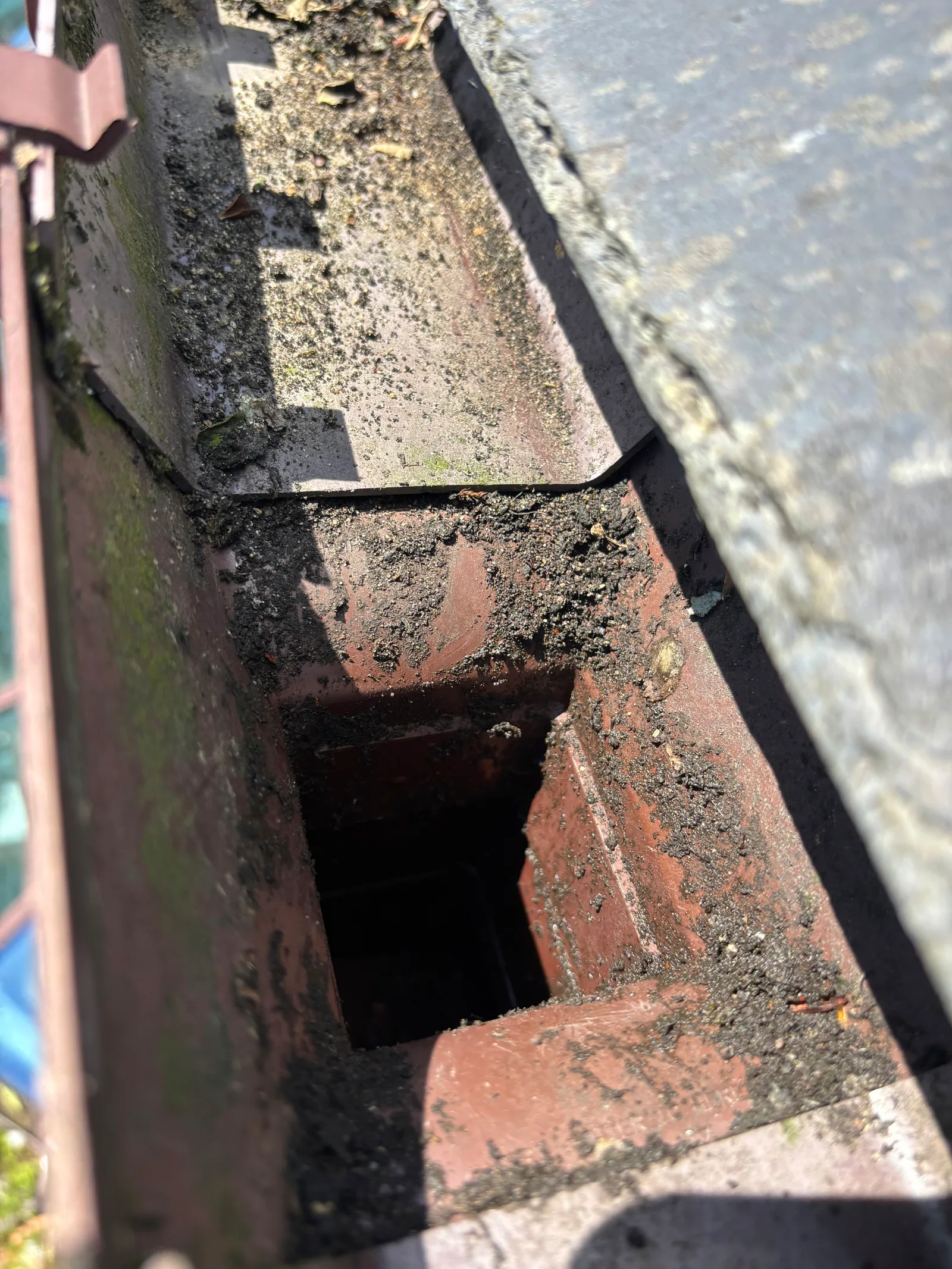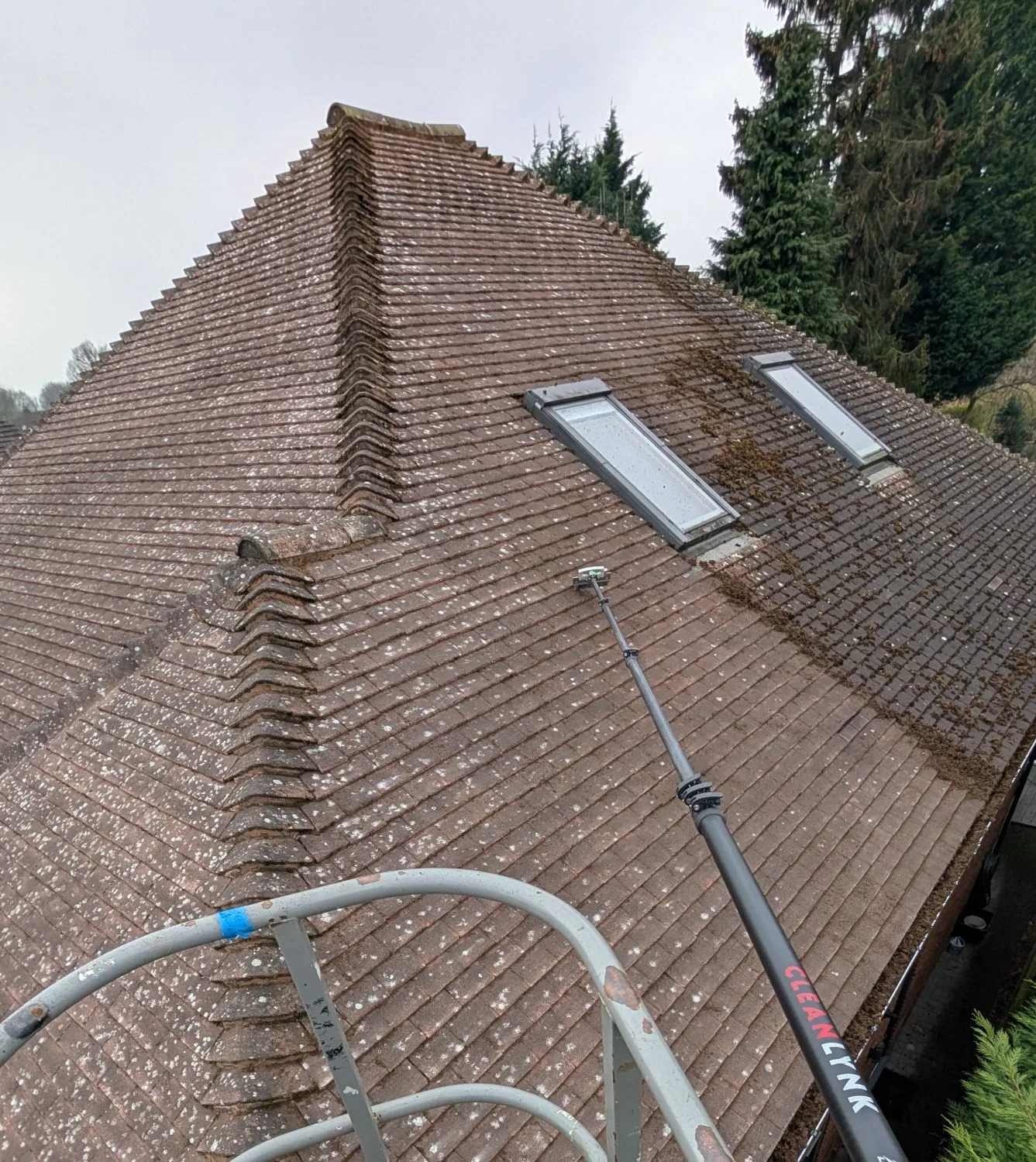
Wakefield gets overlooked by a lot of roof cleaning companies — but the Calder valley dampness means roofs here need attention just as much as anywhere else. Victorian terraces in the city centre, 1930s semis in Sandal, older stone properties in Horbury — they all collect moss fast in this climate. I clean every roof by hand, scraping moss without pressure washing, then treat with biocide so the results stick. Wakefield deserves the same standard of work as anywhere — and that’s what you’ll get.
Manual roof moss removal is the process of scraping moss, lichen and algae from roof tiles by hand using specialist tools — without any high-pressure washing equipment. Wakefield’s position in the Calder valley makes it particularly prone to moss growth. The valley channels damp air through the district, keeping humidity consistently high and creating conditions where moss thrives on almost any roof surface. The city’s housing stock adds to the challenge — Victorian terraces in the WF1 and WF2 areas often have original slate or early concrete tiles that are easily damaged by pressure washing, while the 1930s semis across Sandal and Agbrigg typically have softer concrete tiles where the granular surface layer is vulnerable to stripping. Older stone properties in Horbury present yet another set of considerations, with stone flag roofs and heavier moss accumulation in valley-bottom locations. Manual scraping removes all growth without damaging the tile underneath, preserving its protective surface and weatherproofing. After scraping, a professional-grade biocide is applied that kills remaining spores and prevents moss returning — typically for three to five years, though properties in the dampest parts of the Calder corridor may benefit from retreatment sooner.
Every tile inspected before we start. Scraping technique adjusted to the tile type. No shortcuts.
Wakefield’s housing stock tells the story of the city’s industrial past. Victorian terraces near the centre were built quickly with materials that have stood up well to time but not to moss. The 1930s expansion across Sandal and Agbrigg brought softer concrete tiles that are now well past their first half-century. And the older stone properties in Horbury, many of them built from local sandstone, hold moisture in ways that modern tiles don’t. Pressure washing is too aggressive for all three — it strips surfaces, forces water into places it shouldn’t go, and actually makes moss come back faster.
I inspect every roof before starting, assess the tile type and the severity of growth, and use the right technique for each surface. You get before and after photos so you can see exactly what was done. The biocide treatment means results last — typically 2–4 years before moss begins to return, even in Wakefield’s damp climate.
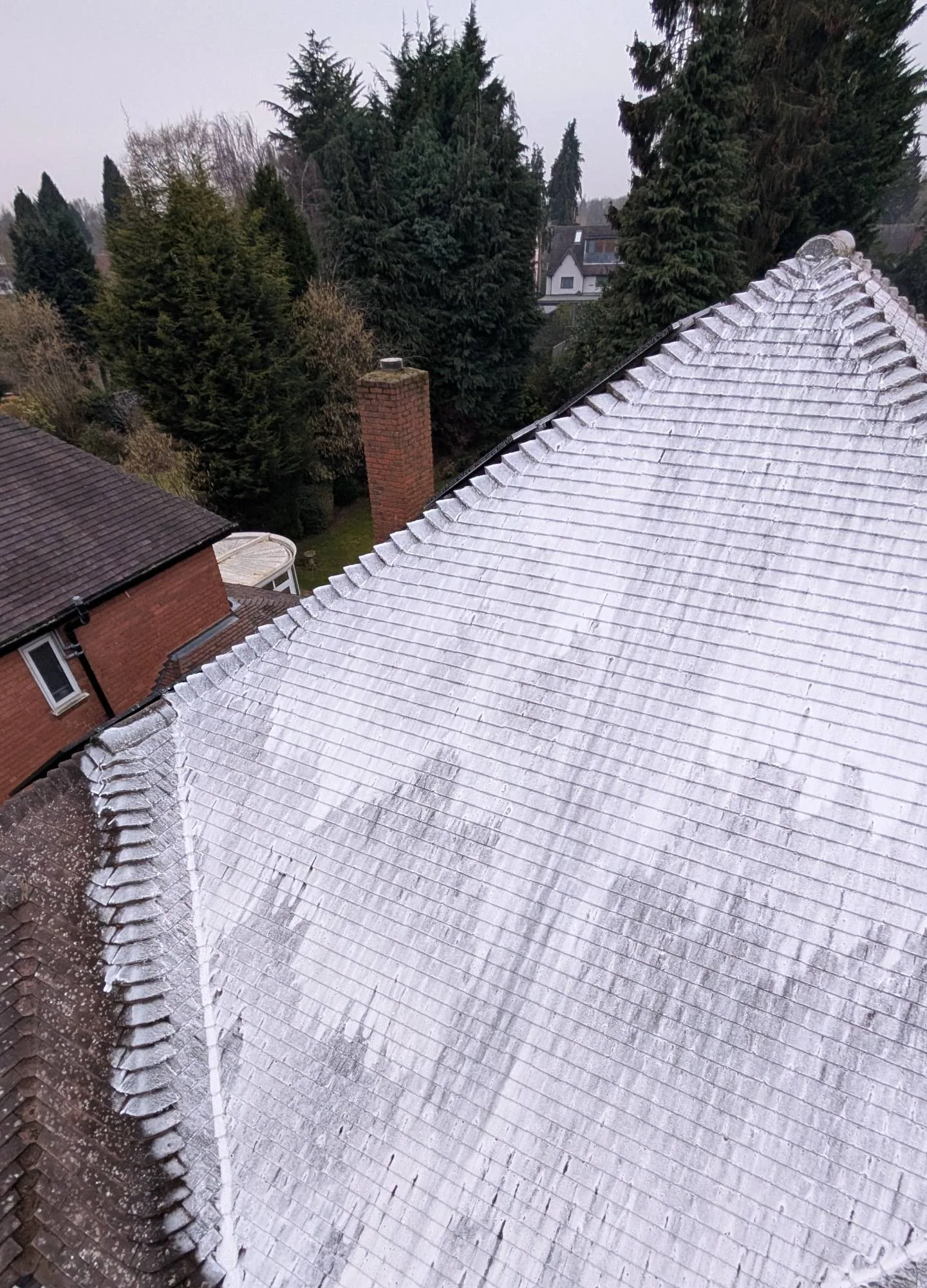
Every roof is different — but here’s what to expect as a guide for Wakefield.
Prices vary with roof access, pitch and condition. Happy to quote from your address in Wakefield.
Typical cost ranges by property type. Final price depends on pitch, access and moss coverage.
| Property type | Approx. roof area | Scraping cost | + Biocide |
|---|---|---|---|
| 2-bed Victorian terrace (WF1, city centre) | 35–50 m² | £170–£260 | +£70–£110 |
| 3-bed 1930s semi (Sandal, WF2) | 55–80 m² | £260–£380 | +£110–£165 |
| Modern detached (Outwood / Stanley) | 70–100 m² | £320–£500 | +£140–£210 |
| Older stone property (Horbury) | 80–120 m² | £400–£650+ | +£160–£250+ |
Includes gutters cleared of fallen moss and before & after photos. No VAT. Get a free quote →
Pressure washing a roof looks dramatic on a TikTok video. But it strips the protective surface off tiles, forces water under flashings, and can crack older concrete tiles on the spot. Manual scraping is slower, but your roof actually survives the process.
Covering Wakefield city centre and every village across the WF postcode area. You’re never far from a professional roof clean.
Covering WF1–WF7 postcodes across the full Wakefield district
The stuff people actually ask. If yours isn’t here, give me a ring.
Roof cleaning in Wakefield starts from £4 per m² for manual moss scraping, with biocide treatment from £2 per m² on top. Wakefield has a real mix of property sizes — a two-bedroom Victorian terrace in the city centre (WF1) typically costs £170–£260 for scraping, a three-bedroom 1930s semi in Sandal or Agbrigg (WF2) runs £260–£380, and larger detached properties in Horbury or Crofton can be £400–£650+ depending on roof area and complexity. Older stone properties in Horbury often have steeper pitches and more intricate rooflines that take longer to work safely. Biocide is strongly recommended — the Calder valley dampness that runs through the Wakefield district accelerates moss regrowth significantly. I can usually provide an accurate quote from your address alone.
Wakefield sits in the Calder valley, which channels damp air through the district and keeps humidity consistently high even during drier spells. This is compounded by the city’s industrial heritage — many properties were built in the Victorian and Edwardian periods with porous stone and early concrete tiles that hold moisture readily. The combination of damp air, older tile materials and the sheltered aspect of many residential streets creates near-perfect conditions for moss, lichen and algae. Properties in lower-lying areas like Agbrigg and along the river corridor towards Horbury tend to see the heaviest growth, but even more modern estates in Outwood and Stanley aren’t immune — north-facing pitches on any property will accumulate moss within a few years if left untreated.
Yes — I cover the full Wakefield district and surrounding areas. Ossett (WF5), Horbury, Normanton (WF6), Outwood, Stanley, Crofton, Walton and everywhere in between are all within my regular working area. Same pricing, same standard of work, same before and after photos. Horbury in particular has a lot of older stone-built properties with heavy moss growth due to the valley-bottom location, and I’ve cleaned several roofs there. Ossett has a good mix of Victorian terraces and more modern housing — both covered. Even if your village isn’t specifically listed, if you’re in the WF postcode area it’s worth getting in touch. I’m based in Skipton and travel through West Yorkshire regularly. Send me your address and I’ll get a quote back quickly.
With manual scraping followed by biocide treatment, you can typically expect three to five years before moss returns to any significant degree. However, Wakefield’s Calder valley location means that properties in more sheltered, low-lying spots — particularly those near the river or with heavy tree cover — may see some regrowth within two to three years on north-facing pitches. South-facing roofs in more open positions, like those on the higher ground around Sandal or the newer estates in Outwood, tend to stay cleaner for longer. The biocide is the key factor — without it, moss can re-establish within 12 to 18 months. With it, spores are killed on contact and germination is inhibited for years. I always recommend biocide as part of the treatment, especially in the Wakefield area where conditions so heavily favour regrowth.
Send your address and I’ll get a free, no-obligation quote back to you — usually within the hour.