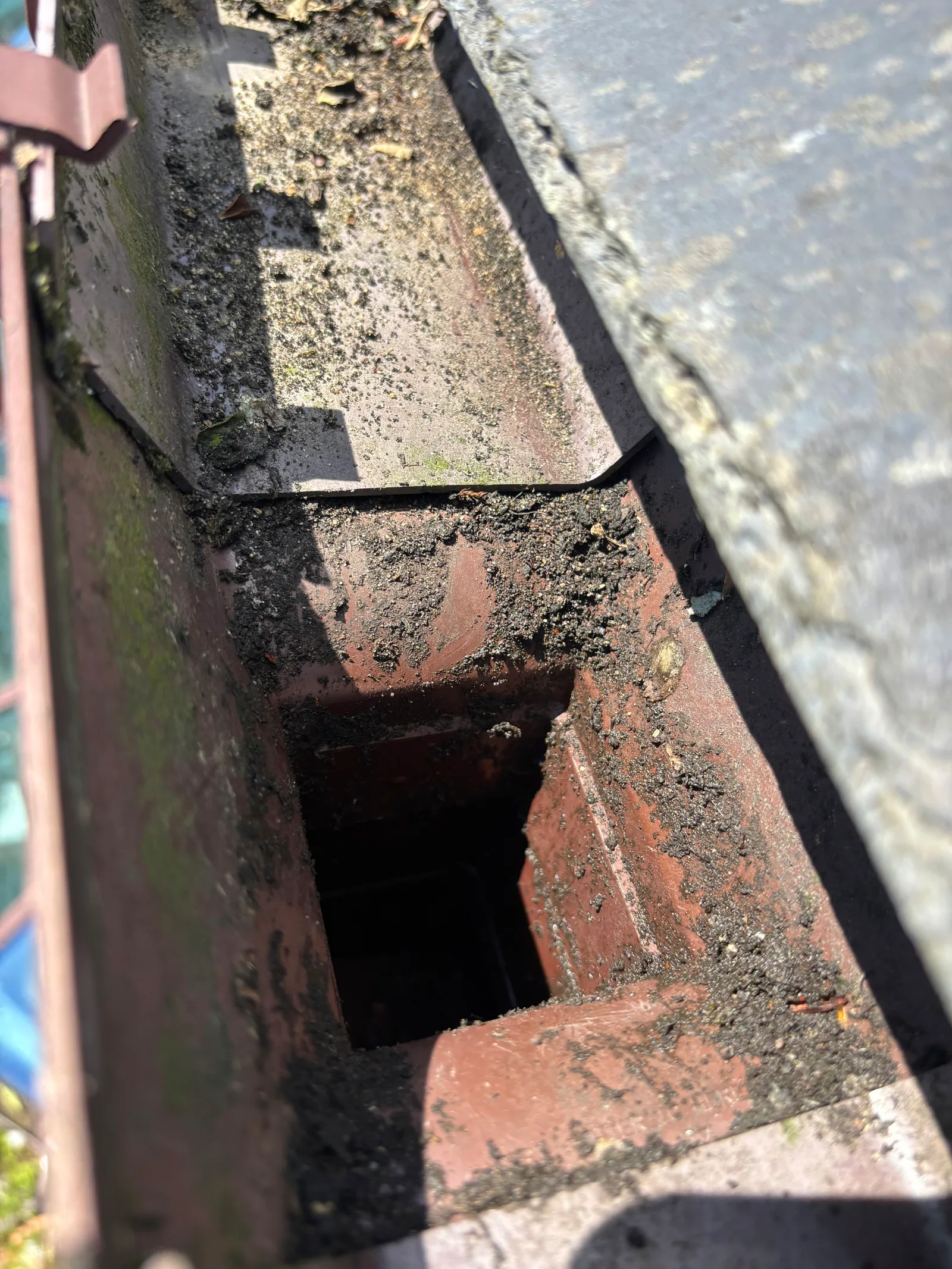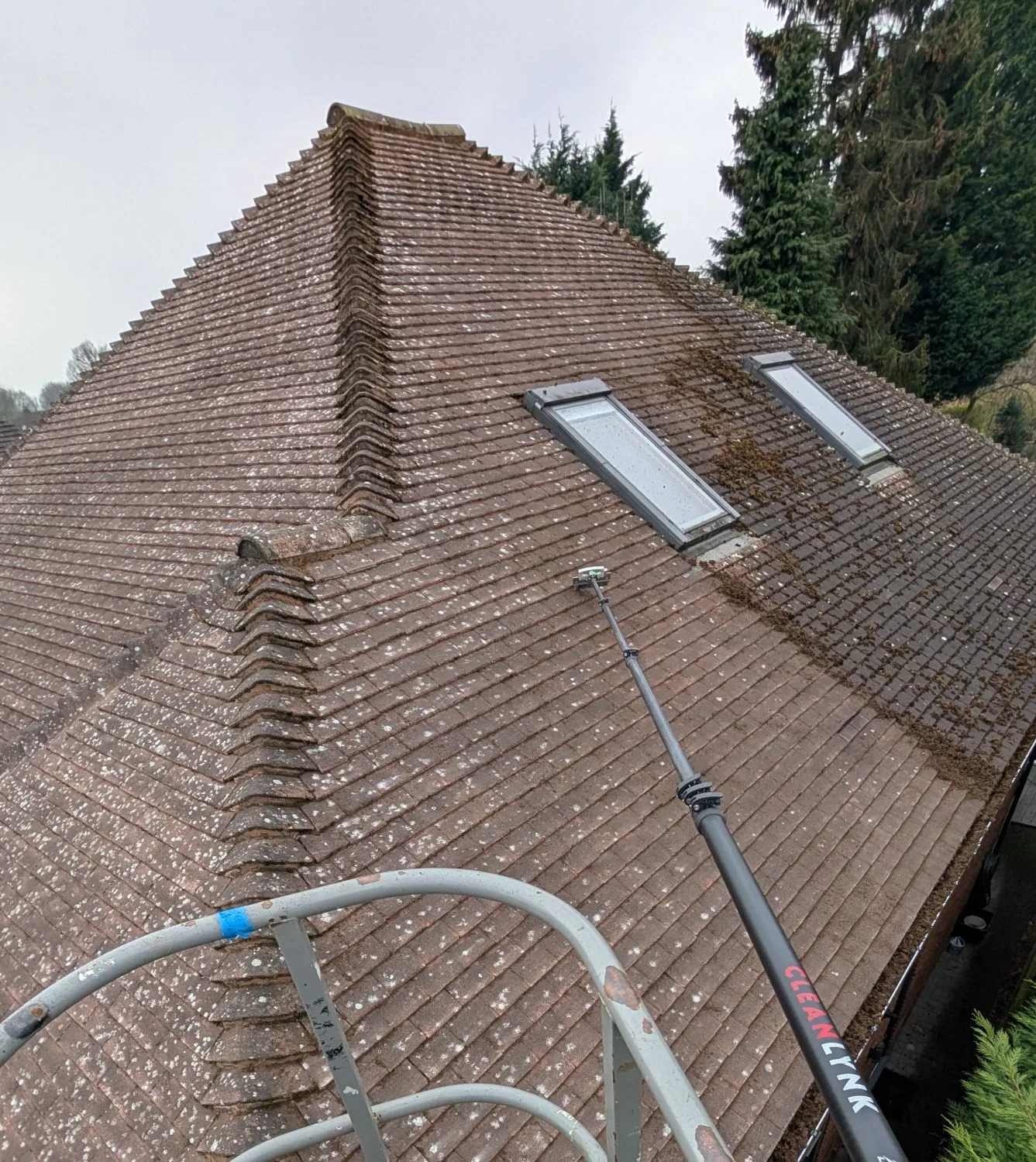
Most roofs in Skipton haven’t been touched in years — and it shows. Moss takes hold fast in the damp Yorkshire climate, especially on north-facing slopes. Left alone it lifts tiles, blocks gutters and holds moisture that cracks your roof in a hard frost. I’m based locally and cover Skipton and the surrounding Craven area. I remove moss by hand — no pressure washers — and treat the roof with biocide so it stays clean for years, not months.
Manual roof moss removal in Skipton refers to the hand-scraping of moss, lichen and biological growth from roof tiles using specialist tools — without the use of high-pressure water. Skipton’s roof stock consists largely of older stone-built properties in the BD23 postcode area, many with traditional clay or concrete interlocking tiles. These tile types are particularly vulnerable to the stripping effect of pressure washing, which removes the surface granules that protect tiles from water ingress and frost damage. Moss on a Yorkshire roof is not merely cosmetic: it retains moisture, expands and contracts with temperature changes, and gradually lifts the edges of tiles — creating gaps where wind and rainwater can penetrate. In Skipton’s damp climate and at altitude, moss can accumulate significant depth within two to three years. Manual scraping removes growth without disturbing the tile surface or the bedding mortar beneath, and is followed by a professional biocide application that inhibits regrowth for two to four years.
Every tile inspected before we start. Scraping technique adjusted to the tile type. No shortcuts.
Skipton has a lot of older stone properties and traditional clay and concrete tiles. Pressure washing looks impressive but it strips the protective surface off tiles and forces water under flashings. Round here that’s a real problem in winter. Manual scraping is slower but your roof comes out of it intact.
I inspect every roof before starting work, assess the tile type and moss severity, and use the right technique for your roof. You get before and after photos so you can see exactly what was done. And the biocide treatment means the results last — typically 2–4 years before moss begins to return.
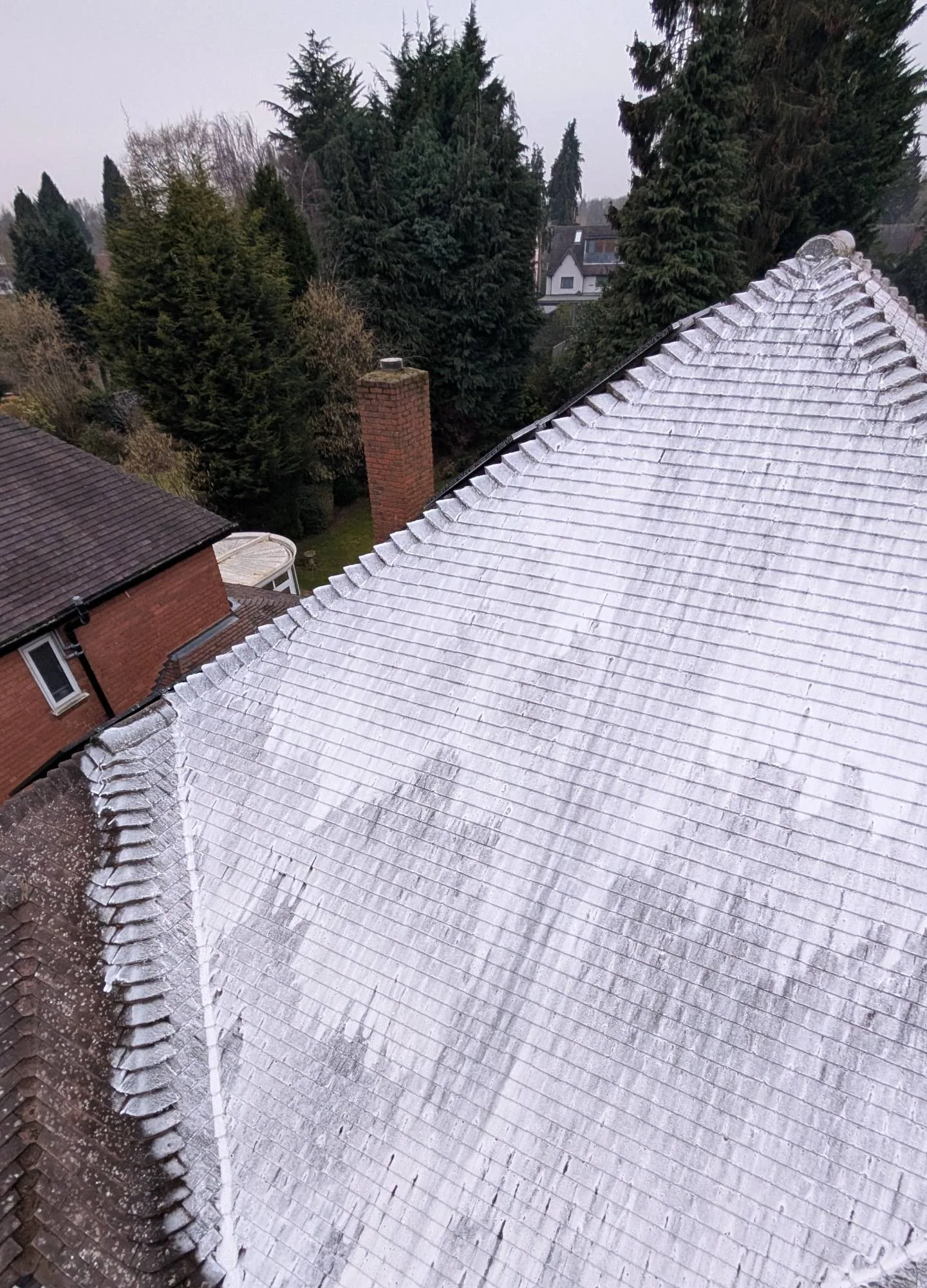
Every roof is different — but here’s what to expect as a guide for Skipton.
Prices vary with roof access, pitch and condition. Happy to quote from your address in Skipton.
Typical cost ranges by property size. Final price depends on pitch, access and moss coverage.
| Property type | Approx. roof area | Scraping cost | + Biocide |
|---|---|---|---|
| 2-bed mid-terrace | 40–55 m² | £180–£280 | +£80–£120 |
| 3-bed semi-detached | 55–80 m² | £260–£380 | +£110–£165 |
| 4-bed detached | 80–120 m² | £350–£550 | +£160–£240 |
| Large detached / Victorian | 120 m²+ | £500+ | +£240+ |
Includes gutters cleared of fallen moss and before & after photos. No VAT. Get a free quote →
Pressure washing a roof looks dramatic on a TikTok video. But it strips the protective surface off tiles, forces water under flashings, and can crack older concrete tiles on the spot. Manual scraping is slower, but your roof actually survives the process.
Based locally, so you’re never far from a professional roof clean. I cover all of these areas and beyond.
Covering BD23 and surrounding postcodes
The stuff people actually ask. If yours isn’t here, give me a ring.
Roof cleaning in Skipton starts from £4 per m² for manual moss scraping, with biocide treatment from £2 per m². As a rough guide: a two-bedroom mid-terrace typically costs £180–£280 for scraping, a three-bedroom semi-detached £260–£380, and a four-bedroom detached £350–£550 depending on pitch and access. These figures cover scraping only — add approximately 50% for biocide on top, which is strongly recommended to prevent rapid regrowth. Skipton’s older stone properties sometimes have more complex rooflines with hips, valleys and multiple pitches that take longer to work through. Elevated properties on the edges of Craven — Embsay, Grassington, Hellifield — can have steeper access challenges. I can usually give you a reliable quote from your address alone — no site visit required for most properties.
Pressure washing strips the protective granular surface off tiles and forces water under flashings — which in a Yorkshire winter means damp and frost damage inside the house. Skipton has a large proportion of older stone properties with traditional clay and concrete tiles that are particularly vulnerable. Clay tiles from pre-1970s construction have a surface layer that, once removed by high-pressure water, cannot be restored. Once gone, water absorption increases significantly, and in a hard frost that trapped moisture expands and cracks the tile from within. We also regularly see pointing and mortar damage after pressure washing — water forced under ridge tiles and valley lead strips at high pressure creates ingress problems that cost hundreds to repair. Manual scraping takes longer but your roof comes out of the process in better condition than it went in, not worse.
Typically 2–4 years in Skipton. The town’s elevation, prevailing westerly winds carrying moisture off the Pennines, and the prevalence of north-facing roof slopes all mean moss regrows faster here than in lower, drier parts of Yorkshire. Properties in the town centre with south-facing aspects may get closer to four years between treatments, while elevated properties on the edges of Craven — Embsay, Grassington, Hellifield — may see noticeable regrowth within two to three years. The biocide we use is a professional-grade, slow-release compound that kills existing moss spores and inhibits new germination. It works progressively over the months following application — you may see some discolouration for a few weeks as the moss dies back and weathers off naturally. A refresh biocide-only treatment is available at reduced cost if you just need retreating without a full scrape.
Get a free, no-obligation quote based on your address. Most quotes back within the hour.