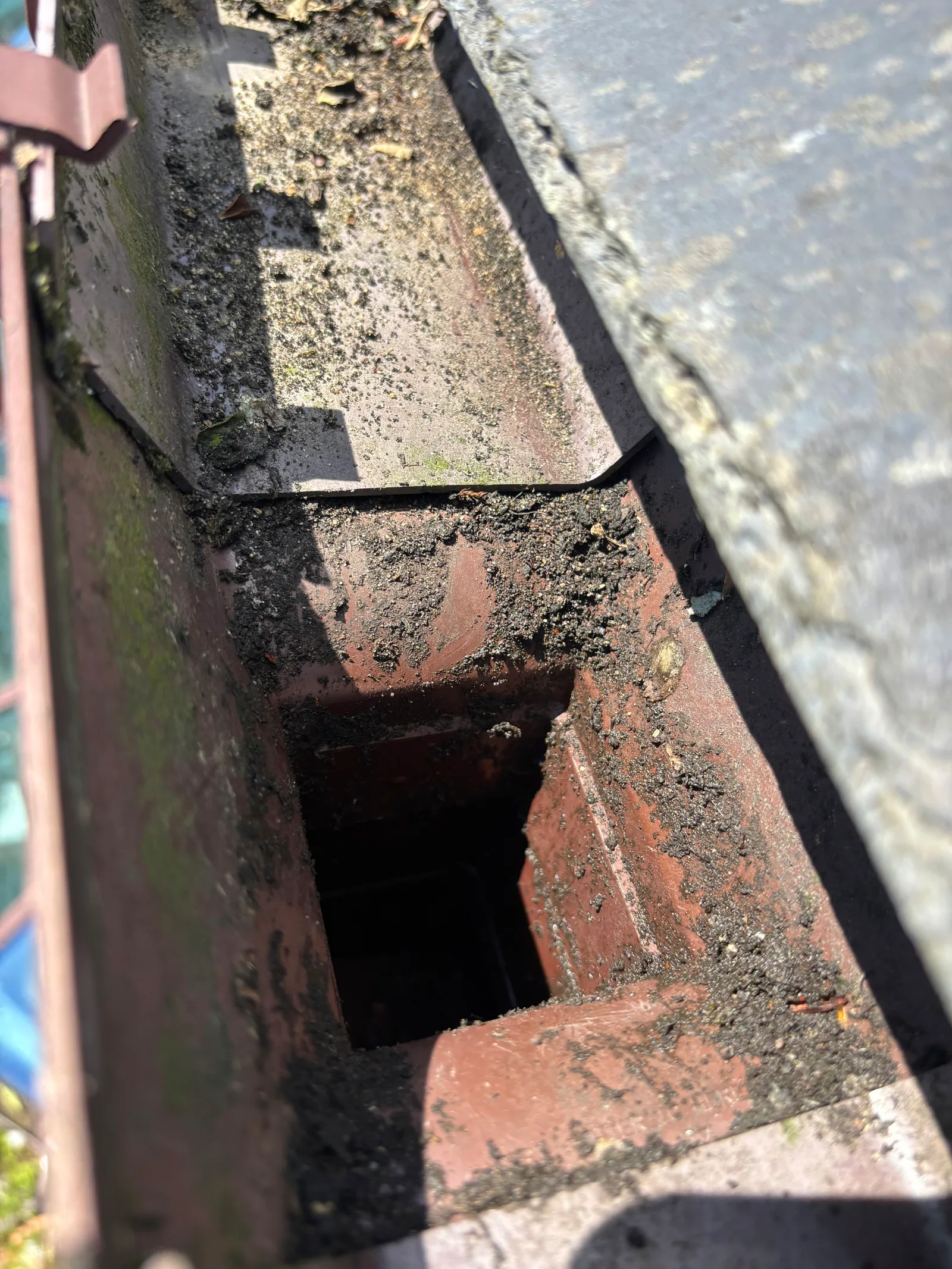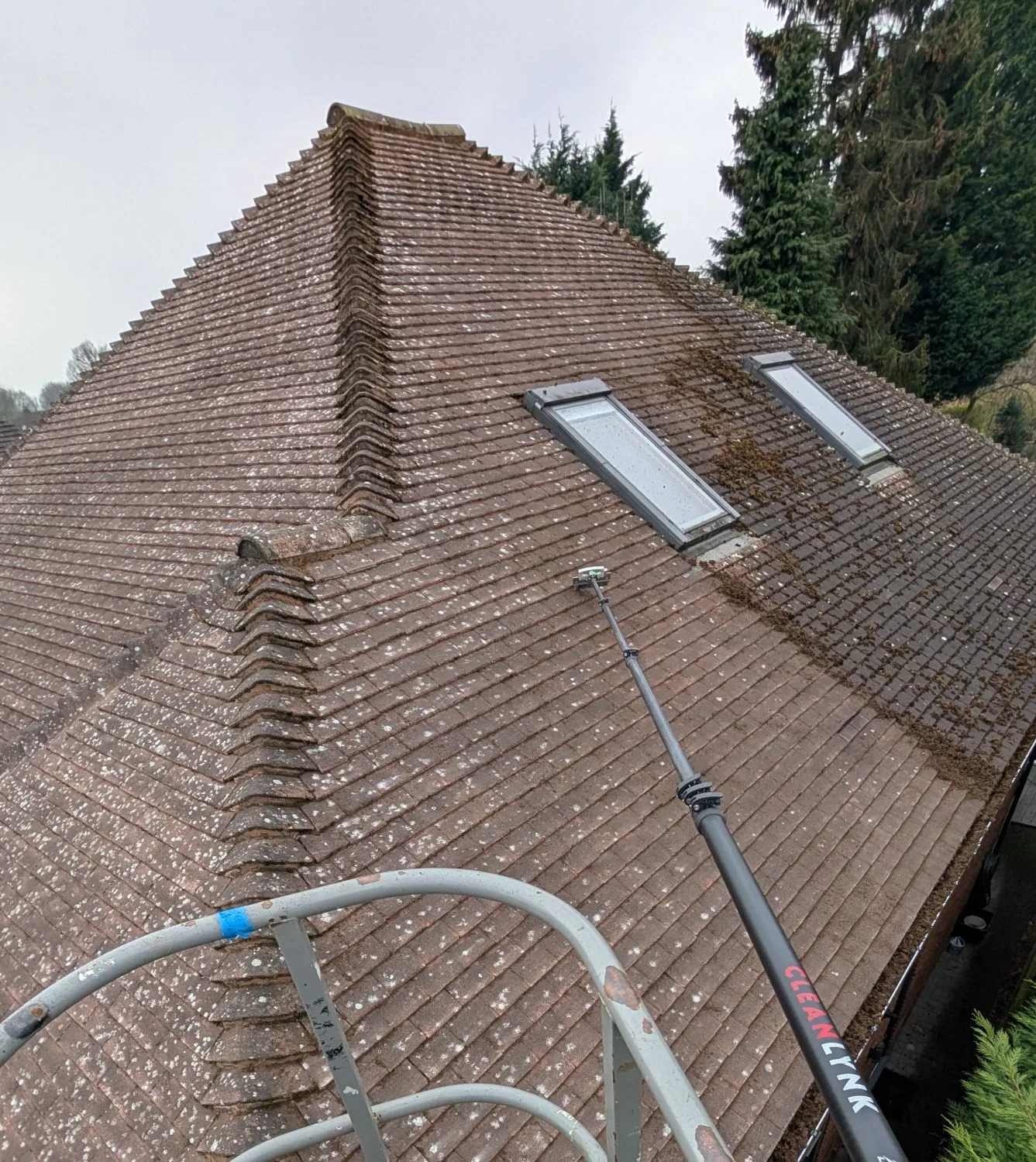
Wind, rain and damp air funnel straight up the Aire valley and hit Silsden’s rooftops hard. From the old mill workers’ cottages in the town centre to the 1960s estates on the hillside, moss builds up fast and stays put. Pressure washing causes more harm than good on these roofs. I remove moss by hand, scraping every tile carefully, then treat with biocide so your roof stays clean for years — not months.
Manual roof moss removal in Silsden means hand-scraping moss, lichen and algae from roof tiles using specialist hand tools — no high-pressure water involved. Silsden’s position on the hillside above the Aire valley, between Keighley and Skipton, makes it one of the windier and damper spots in the district — and that combination drives aggressive moss growth across every roof type. The town has a distinctive mix of properties: stone-built terraces from the mill era clustered around Kirkgate and the town centre, Victorian and Edwardian houses along Bolton Road, 1960s–80s concrete-tiled estates climbing the hillside, and newer builds at Airedale Meadows. Each roof type responds differently to cleaning, and pressure washing is too aggressive for all of them. On older stone terraces it dislodges slates and blasts out mortar; on concrete tiles it strips the protective granular coating that keeps water out. Manual scraping removes growth cleanly without damaging the tile surface. A professional-grade biocide is then applied to kill remaining spores and prevent regrowth for three to five years — especially important in Silsden where the constant wind and moisture mean untreated roofs can moss over again within two years.
Every tile inspected before we start. Scraping technique adjusted to the tile type. No shortcuts.
Silsden isn’t one type of roof — it’s dozens. The stone terraces around Kirkgate have stone slate or early concrete tiles, many over a century old. The hillside estates from the 1960s–80s have standard concrete interlocking tiles that are now well past their prime. The newer builds at Airedale Meadows have modern tiles but still face the same relentless Aire valley weather. Pressure washing treats every roof the same — and damages all of them. Manual scraping means I can adjust my technique to every tile type, working carefully across fragile stone slates and more firmly on sound modern tiles.
I inspect every roof before starting work, assess the tile condition and moss severity, and work methodically across the whole surface. You get before and after photos so you can see exactly what was done. The windy, exposed position that defines Silsden means biocide treatment is essential — without it, the constant moisture means moss starts returning within a year or two. With biocide, you get three to five years of clean roof.
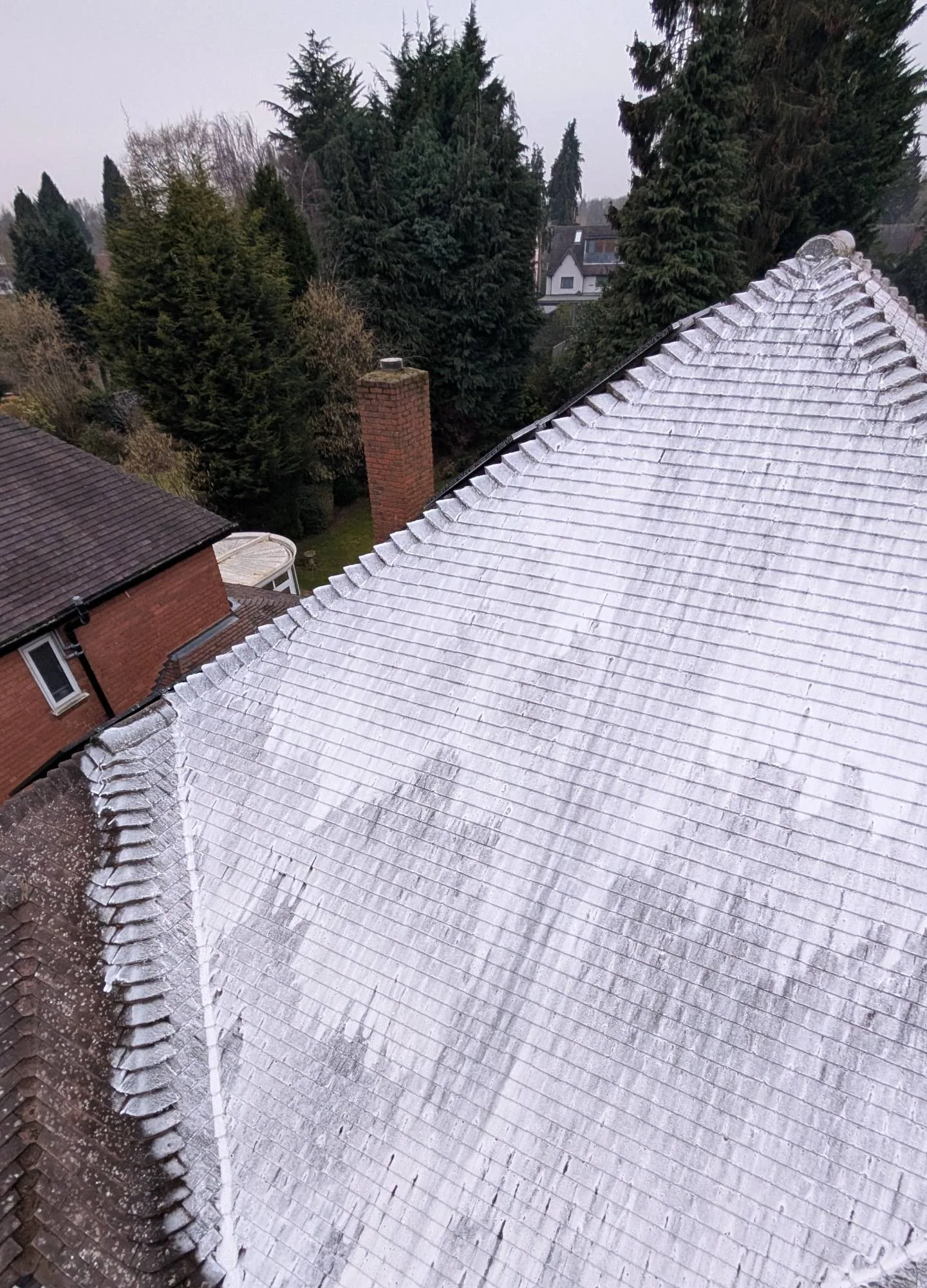
Every roof is different — but here’s what to expect as a guide for Silsden.
Prices vary with roof access, pitch and condition. Happy to quote from your address in Silsden.
Typical cost ranges by property size. Final price depends on pitch, access and moss coverage.
| Property type | Approx. roof area | Scraping cost | + Biocide |
|---|---|---|---|
| 2-bed stone terrace (Kirkgate / town centre) | 40–55 m² | £180–£280 | +£80–£120 |
| 3-bed semi (hillside estates) | 55–80 m² | £260–£380 | +£110–£165 |
| 3–4 bed detached (Bolton Road / edges) | 75–110 m² | £340–£520 | +£150–£220 |
| Newer detached (Airedale Meadows) | 80–120 m² | £350–£550 | +£160–£240 |
Includes gutters cleared of fallen moss and before & after photos. No VAT. Get a free quote →
Pressure washing a roof looks dramatic on a TikTok video. But it strips the protective surface off tiles, forces water under flashings, and can crack older concrete tiles on the spot. In Silsden, where wind-driven rain already hammers every roof surface, the last thing you want is to remove the tile’s own defences. Manual scraping is slower, but your roof actually survives the process.
Based locally, so you’re never far from a professional roof clean. I cover all of these areas and beyond.
Covering BD20 postcode area and the wider Aire valley
The stuff people actually ask. If yours isn’t here, give me a ring.
Roof cleaning in Silsden starts from £4 per m² for manual moss scraping, with biocide treatment from £2 per m². Silsden has a real mix of property types — a two-bedroom stone terrace in the town centre or along Kirkgate typically costs £180–£280 for scraping, a three-bedroom semi on the hillside estates £260–£380, and larger detached properties £400–£650+ depending on roof area, pitch and access. The 1960s–80s estates on the higher ground often have concrete tile roofs with significant moss build-up due to the exposed position above the Aire valley. Biocide treatment is additional at £2–£3/m² and is well worth it in Silsden — the windy, damp conditions mean untreated roofs see moss return faster than in more sheltered towns. I can usually give an accurate quote from your address alone — send it over and I’ll get back to you quickly.
No — and this is one of the most common mistakes I see in Silsden. The stone-built terraces in the town centre, along Kirkgate and Bolton Road, often have stone slate or older concrete tile roofs that are particularly vulnerable to pressure washing. High-pressure water strips the protective granular surface off concrete tiles and can crack or dislodge stone slates entirely. It also forces water under flashings and into the roof structure, which can cause damp problems inside the property. Manual scraping removes moss without any of these risks. I adjust my technique to each tile type — working carefully across stone slates, and using firmer strokes on modern concrete tiles where appropriate. After scraping, biocide kills remaining spores and prevents regrowth for years.
Yes — Steeton, Eastburn, Sutton-in-Craven, Cross Hills, Cononley and Bradley are all within my regular working area. I’m based in Skipton, so Silsden and the surrounding Aire valley villages are some of the closest areas I cover. Same pricing, same standard of work, same before and after photos wherever you are in the BD20 and BD23 postcode areas. Steeton and Eastburn in particular have a similar mix of older stone terraces and newer housing to Silsden, with the same exposure to Aire valley weather. Cross Hills and Cononley see plenty of moss on their hillside properties too. If your village isn’t listed, it’s still worth asking — I cover most of the area between Keighley and Skipton regularly.
Silsden sits on the hillside above the Aire valley between Keighley and Skipton, which gives it one of the more exposed positions in the area. The prevailing westerly winds funnel up the valley and hit Silsden’s roofs hard, driving rain into tile surfaces and keeping them damp for longer. This persistent dampness is what moss needs to thrive. Properties on the higher ground — the 1960s–80s estates especially — are the most exposed and tend to develop heavy moss growth on north and west-facing pitches within two to three years. The wind also accelerates physical wear on tiles, making already-weakened surfaces even more hospitable to moss spores. Biocide treatment after manual scraping is particularly important in Silsden because it addresses the root cause — killing spores so they can’t exploit the damp conditions. With biocide, most Silsden roofs stay clean for three to five years even in the worst-facing positions.
Get a free, no-obligation quote based on your address. Most quotes back within the hour.