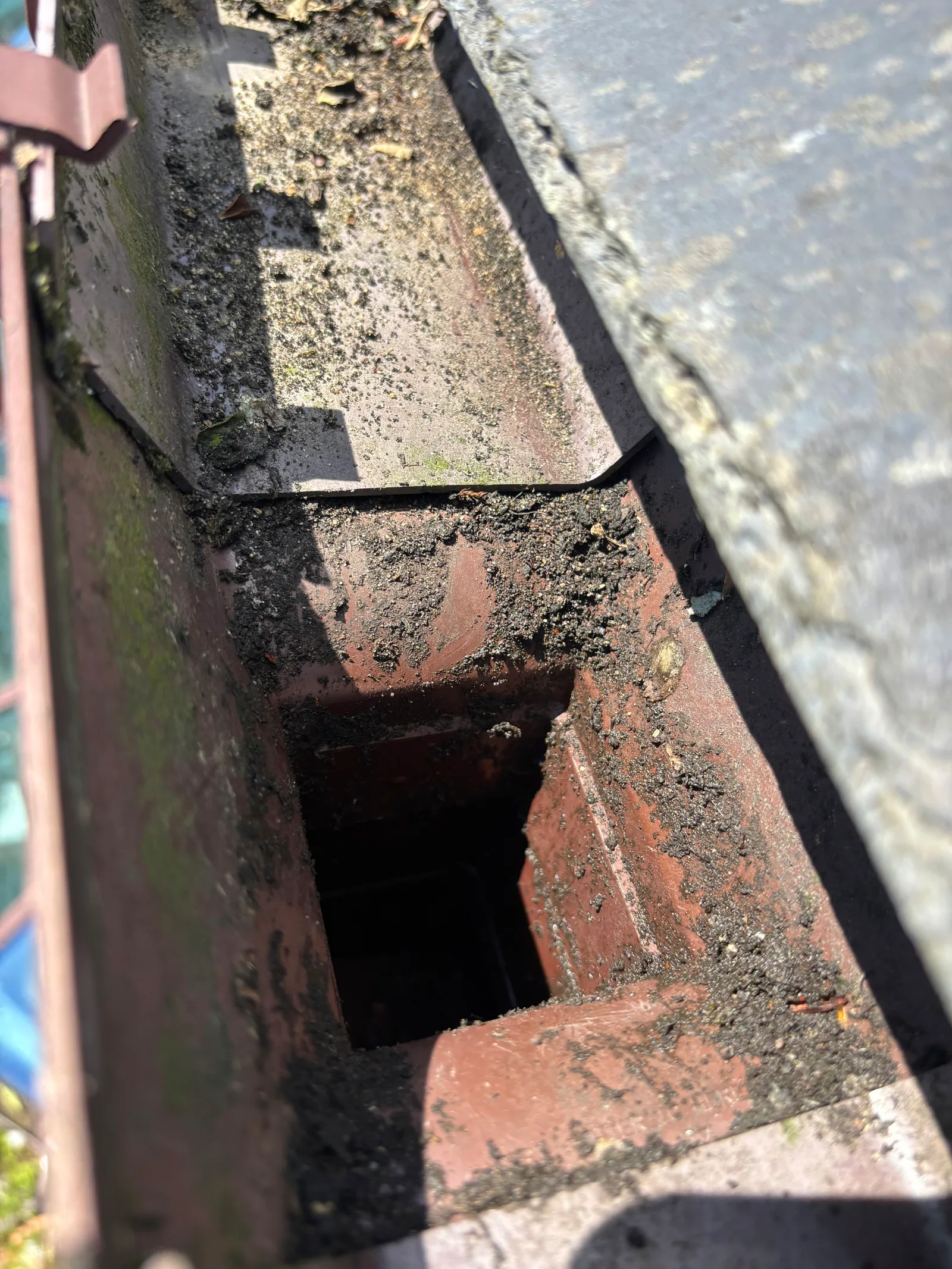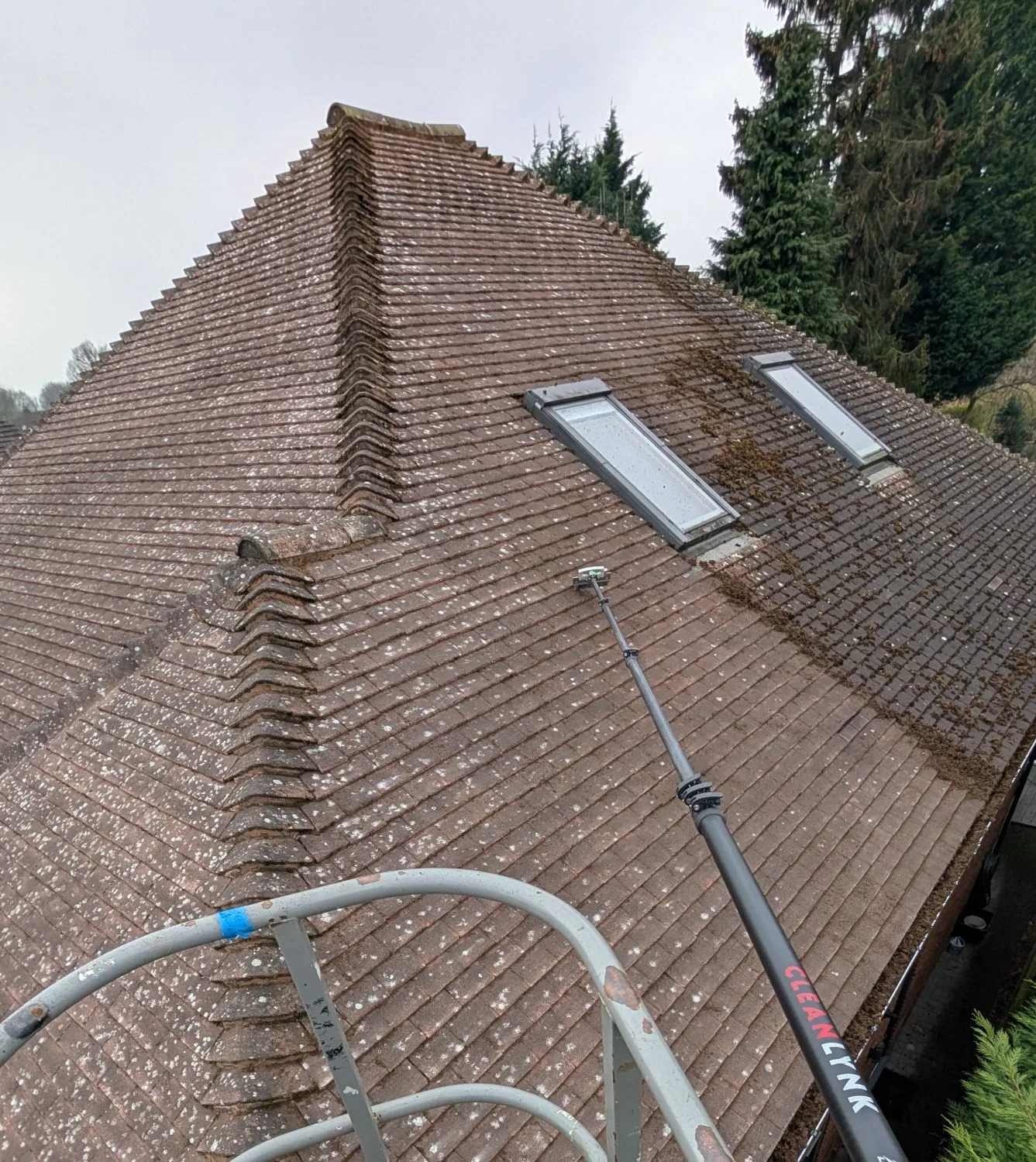
Perched between Bradford and Halifax on the A647, Queensbury is one of the highest and most exposed towns in England. Constant wind, driving rain, hard frosts and low cloud mean moss and lichen grow aggressively here — faster and thicker than in the sheltered valleys below. I remove it all by hand, tile by tile, then treat with professional-grade biocide so your roof stays clean for years, not months.
Manual roof moss removal means scraping moss, lichen and organic growth from roof tiles by hand — no high-pressure water, no jet washing, no shortcuts. In Queensbury, this matters more than almost anywhere else in West Yorkshire. At over 1,000 feet above sea level, roofs here face an extreme combination of wind-driven rain, prolonged dampness, frequent hard frosts and low cloud that keeps surfaces wet for days at a time. That environment produces not just thick moss but deeply embedded lichen — a stubborn, rock-like growth that bonds to stone and concrete surfaces far more aggressively than standard moss. The BD13 area is dominated by stone-built Victorian terraces originally housing mill workers, many with traditional stone slate roofs. These slates have a rough, porous texture that gives moss and lichen an ideal grip. Pressure washing these roofs would strip the stone surface, force water through lapped joints and accelerate weathering on material that has already endured over a century of hilltop exposure. Manual scraping removes the growth without damaging the slate. After scraping, a professional-grade biocide kills remaining spores and slows regrowth — critical at this elevation, where untreated roofs can see significant moss return within eighteen months to two years.
Every tile inspected before we start. Scraping technique adjusted to the tile type. No shortcuts.
Queensbury isn’t like cleaning a roof in the valley. The elevation means constant wind exposure, heavier rainfall and longer freeze-thaw cycles that crack tiles weakened by moss. Stone slate roofs on the older terraces around the centre need careful hand-scraping — pressure washing would blast water through the lapped joints and strip the weathered stone surface. The 1960s–70s estates towards Ambler Thorn and Mountain use concrete tiles that are equally vulnerable to high-pressure damage after decades of frost action.
I inspect every roof before starting, assess the tile type and lichen severity, and adjust technique accordingly. Queensbury roofs often have both moss and lichen simultaneously — the lichen needs firmer, more targeted scraping than moss alone. You get before and after photos so you can see exactly what was done. And the biocide treatment is essential up here — without it, regrowth starts within months rather than years.
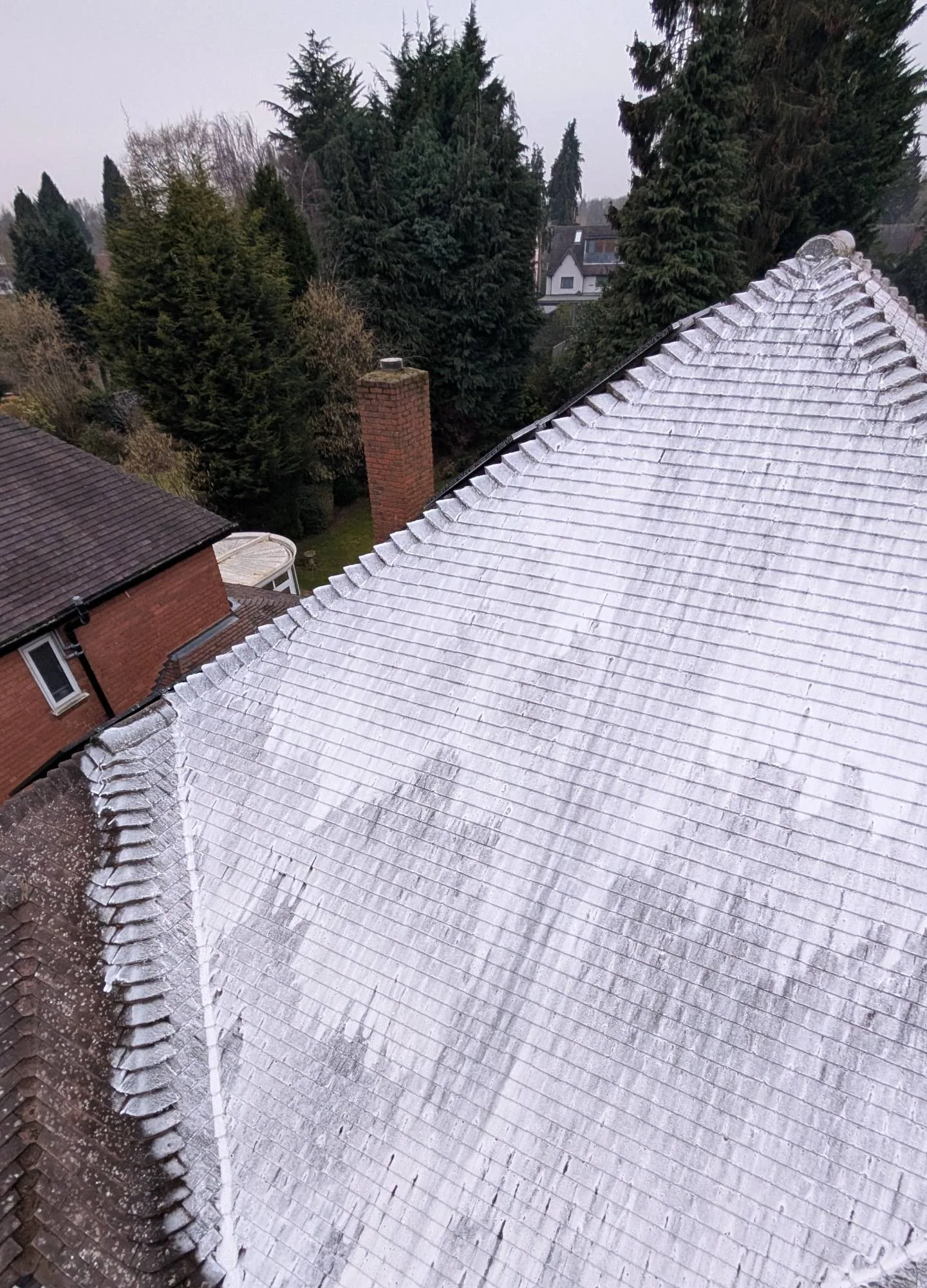
Every roof is different — but here’s what to expect as a guide for Queensbury.
Prices vary with roof access, pitch and condition. Happy to quote from your address in Queensbury.
Typical cost ranges by property size. Final price depends on pitch, access, moss severity and lichen coverage.
| Property type | Approx. roof area | Scraping cost | + Biocide |
|---|---|---|---|
| 2-bed stone terrace (centre) | 35–50 m² | £180–£300 | +£70–£110 |
| 3-bed semi (Ambler Thorn / Mountain) | 55–80 m² | £260–£400 | +£110–£170 |
| 3–4 bed detached (Shelf / Thornton) | 80–120 m² | £350–£550 | +£160–£240 |
| Large detached / stone slate | 120 m²+ | £500+ | +£240+ |
Includes gutters cleared of fallen moss and before & after photos. No VAT. Get a free quote →
Pressure washing a roof looks dramatic on a TikTok video. But it strips the protective surface off tiles, forces water under flashings, and can crack older concrete tiles on the spot. On Queensbury’s stone slates — already weathered by over a century of hilltop exposure — the damage is even worse. Manual scraping is slower, but your roof actually survives the process.
Based locally, covering the high ground between Bradford and Halifax — and everywhere in between.
Covering BD13 and surrounding postcodes
The stuff people actually ask. If yours isn’t here, give me a ring.
Queensbury sits at over 1,000 feet above sea level — one of the highest towns in England. The combination of constant wind exposure, heavy rainfall, hard frosts and low cloud means roofs here stay damp for far longer than in the surrounding valleys. That persistent moisture is exactly what moss and lichen need to thrive. Stone slate roofs, which are very common in Queensbury’s Victorian terraces, have a rough, porous surface that gives moss an easy foothold. Lichen in particular is aggressive at this elevation — it embeds into the stone surface and is much harder to shift than standard moss. North-facing pitches on the exposed side of the hill can develop thick growth within two to three years of cleaning, even with biocide treatment. It’s one of the most challenging environments for roof maintenance in West Yorkshire, which is exactly why manual removal and proper biocide treatment matters so much here.
Roof cleaning in Queensbury starts from £4 per m² for manual moss scraping, with biocide treatment from £2 per m². The BD13 area has a distinctive mix of property types — dense Victorian stone terraces in the centre typically cost £180–£300 for scraping, three-bedroom semis on the estates £260–£400, and larger detached properties on the outskirts towards Thornton or Shelf £400–£650+ depending on roof area and access. Stone slate roofs, which are very common in Queensbury, often take longer to work than concrete tiles because the moss and lichen growth is deeper and more firmly embedded in the textured surface. The exposure at this elevation also means moss coverage tends to be heavier than comparable properties in the valleys below. Biocide is strongly recommended at £2–£3/m² given the speed of regrowth up here. I can usually quote from your address — send it over and I’ll get back to you quickly.
Yes — Thornton, Clayton, Shelf, Illingworth, Ogden, Ambler Thorn and Mountain are all within my regular working area. Same pricing, same standard of work, same before and after photos. Many of these villages share the same exposure problems as Queensbury itself — Ogden and Mountain in particular sit at similar elevations and get hammered by the same weather. Thornton and Clayton have a good mix of older stone properties and newer builds, all of which benefit from manual cleaning rather than pressure washing. Shibden, down in the valley towards Halifax, tends to see more moss than lichen due to the sheltered, damp conditions there. I’m based in Skipton so I travel through this area regularly. Get in touch with your address and I’ll turn a quote around quickly.
Wind is a genuine consideration for roof work in Queensbury — it’s one of the most exposed towns in West Yorkshire and gusts can be severe, particularly in autumn and winter. I monitor weather forecasts carefully and won’t work on a roof if wind speeds make it unsafe. That said, I work on exposed roofs across Yorkshire regularly and I’m IPAF-certified for working at height. For Queensbury specifically, I often schedule work for calmer spells and aim to complete jobs in a single visit where possible. If conditions deteriorate mid-job, I’ll secure everything and return to finish at no extra charge. I’d rather postpone than take risks — your roof and my safety both matter. The wind exposure up here also means I pay extra attention to lifted or displaced tiles during every clean, since wind damage and moss damage often go hand in hand at this elevation.
Get a free, no-obligation quote based on your address. Most quotes back within the hour — even up at 1,000ft.