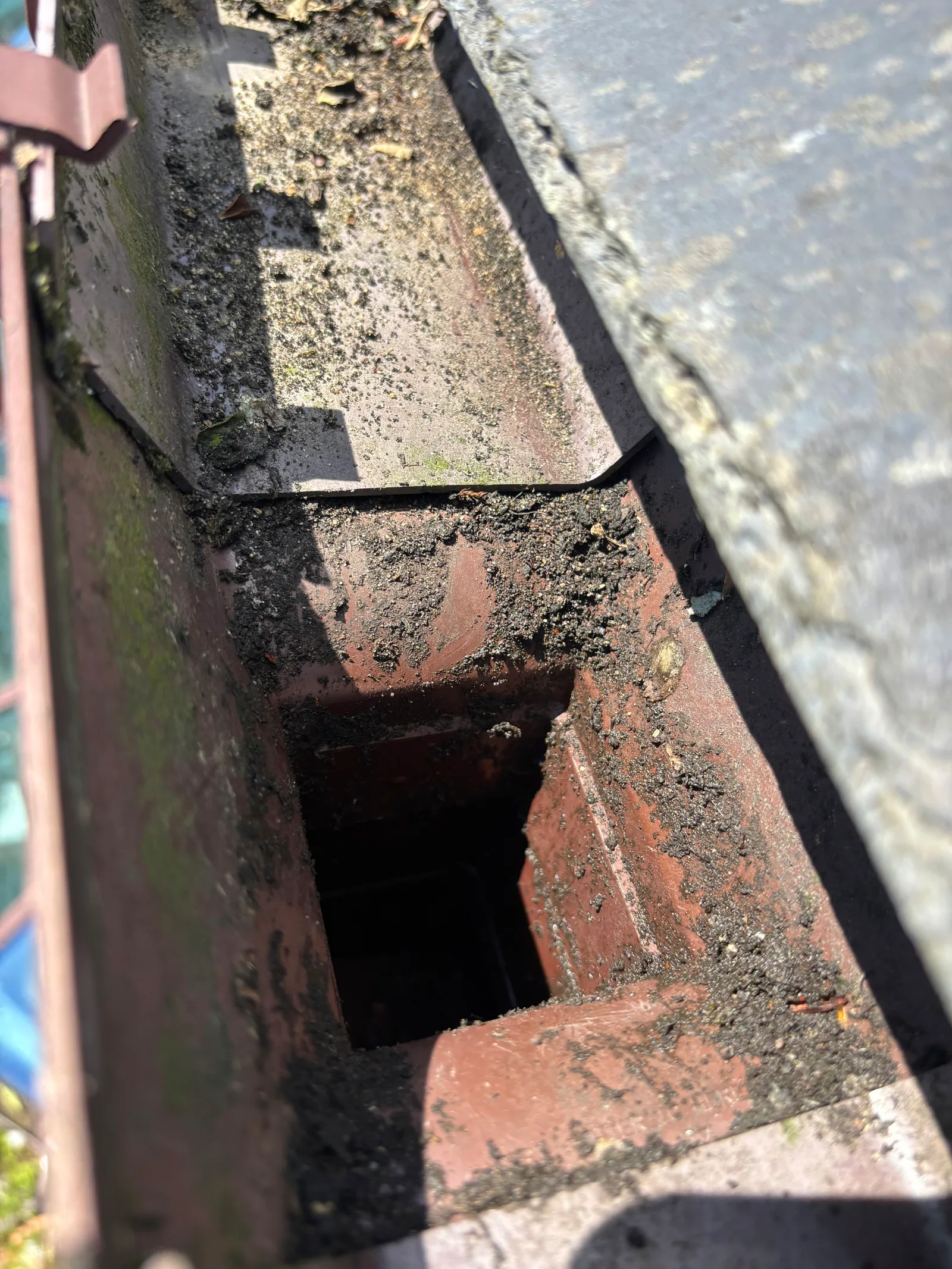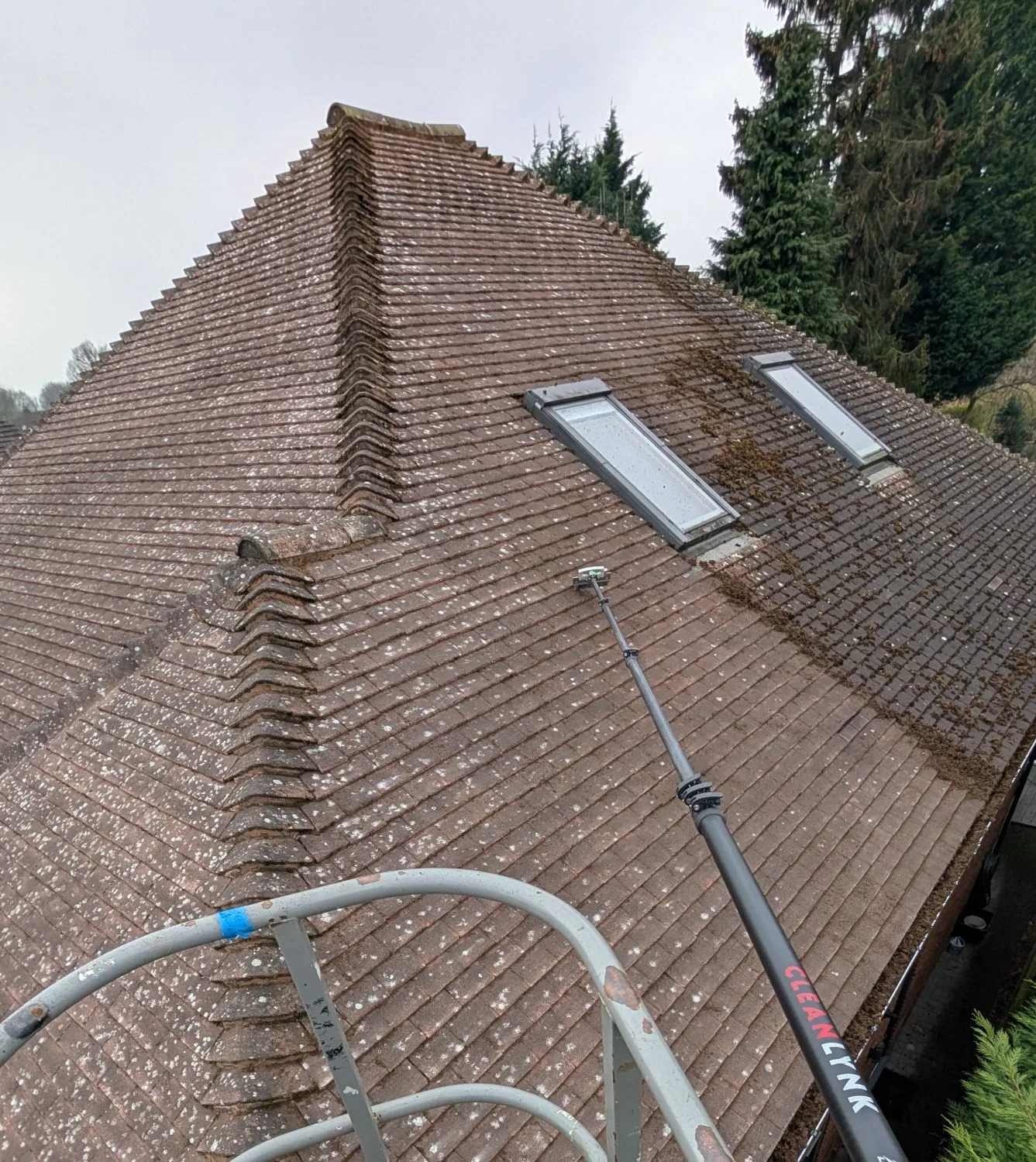
Ilkley’s elevated position on the edge of the moor means roofs here take a battering — wind-driven rain, heavy moss growth, and long damp winters. Left untreated, moss lifts tiles and holds moisture that causes real damage when the frost comes. I cover Ilkley and the Wharfe Valley and remove moss by hand — no pressure washers — then treat with biocide so it stays clean for years, not months.
Manual roof moss removal in Ilkley refers to the hand-scraping of moss, lichen and biological growth from roof tiles — without high-pressure water. Ilkley’s elevated position on the edge of the moor and its concentration of Victorian and Edwardian stone properties make it one of the more challenging roof cleaning environments in West Yorkshire. The LS29 postcode area experiences consistent wind-driven rainfall and prolonged dampness, which accelerates moss colonisation — particularly on north-facing and east-facing roof pitches. Left untreated, moss lifts tile edges, compresses bedding mortar and holds moisture that freezes and expands in winter, causing tile cracking. Traditional clay and concrete tiles common in Victorian-era Ilkley properties are especially vulnerable to this cycle. Manual scraping removes biological growth without stripping the protective granular surface of the tile, which high-pressure washing would erode. The process is completed with a professional biocide spray that inhibits regrowth for typically two to four years in this climate.
Every tile inspected before we start. Scraping technique adjusted to the tile type. No shortcuts.
Ilkley has a mix of Victorian stone properties and newer builds, many with older clay or concrete tiles. Pressure washing strips the protective surface off tiles and forces water under flashings — on exposed properties up here that causes serious problems. Manual scraping takes longer but your roof comes out of it in good shape.
I inspect every roof before starting work, assess the tile type and moss severity, and use the right technique for your roof. You get before and after photos so you can see exactly what was done. And the biocide treatment means the results last — typically 2–4 years before moss begins to return.
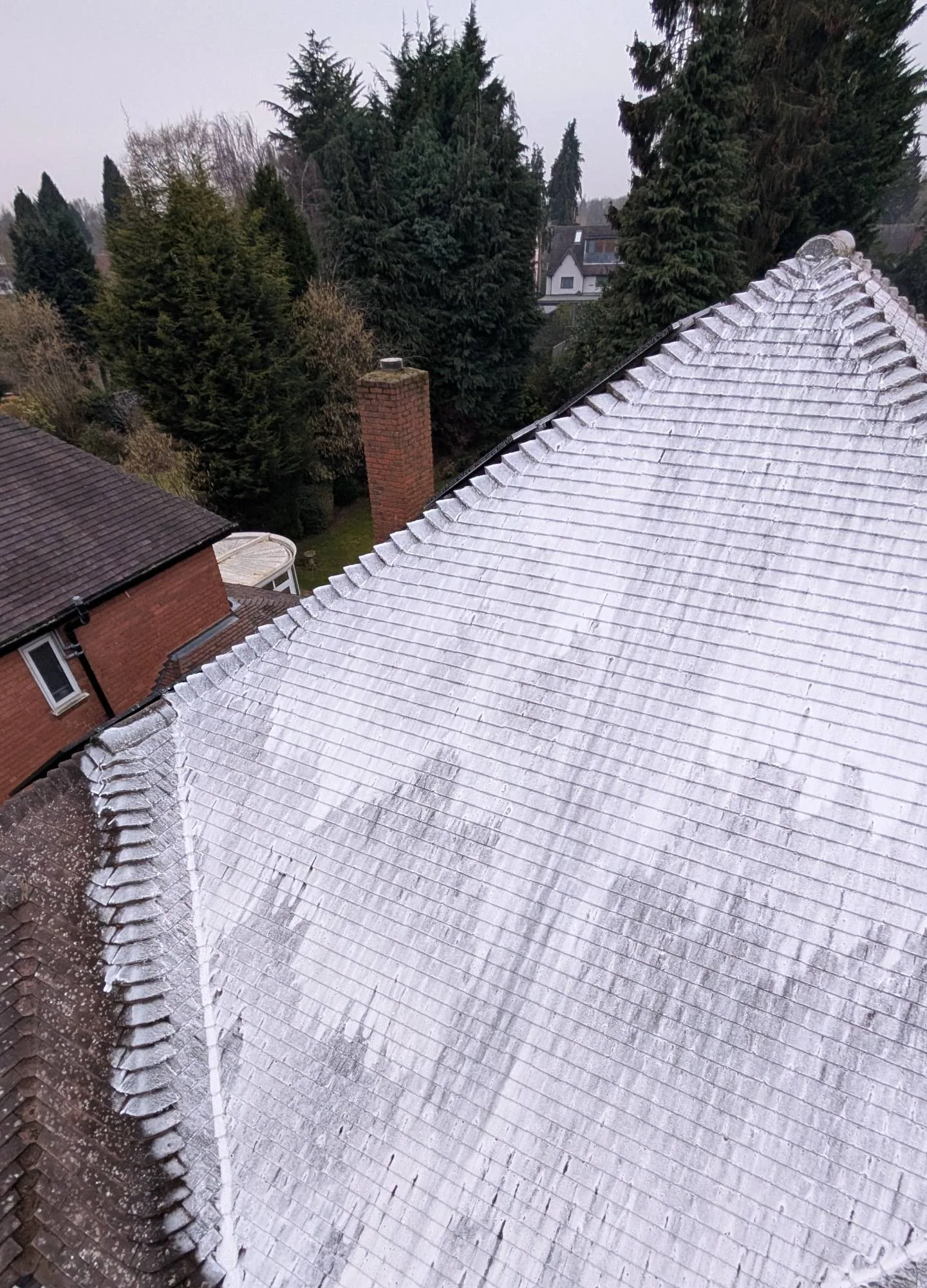
Every roof is different — but here’s what to expect as a guide for Ilkley.
Prices vary with roof access, pitch and condition. Happy to quote from your address in Ilkley.
Typical cost ranges by property size. Final price depends on pitch, access and moss coverage.
| Property type | Approx. roof area | Scraping cost | + Biocide |
|---|---|---|---|
| 2-bed mid-terrace | 40–55 m² | £180–£280 | +£80–£120 |
| 3-bed semi-detached | 55–80 m² | £260–£380 | +£110–£165 |
| 4-bed detached | 80–120 m² | £350–£550 | +£160–£240 |
| Large detached / Victorian | 120 m²+ | £500+ | +£240+ |
Includes gutters cleared of fallen moss and before & after photos. No VAT. Get a free quote →
Pressure washing a roof looks dramatic on a TikTok video. But it strips the protective surface off tiles, forces water under flashings, and can crack older concrete tiles on the spot. Manual scraping is slower, but your roof actually survives the process.
Based locally, so you’re never far from a professional roof clean. I cover all of these areas and beyond.
Covering LS29 and surrounding postcodes
The stuff people actually ask. If yours isn’t here, give me a ring.
Roof cleaning in Ilkley starts from £4 per m² for manual moss scraping, with biocide treatment from £2 per m². As a rough guide: a two-bedroom mid-terrace in Ilkley typically costs £180–£280 for scraping, a three-bedroom semi-detached £260–£380, and a four-bedroom detached £350–£600 depending on pitch complexity. Ilkley’s older stone properties and moorland position mean many roofs have steeper pitches or more complex rooflines — hips, valleys, multiple ridges — which affects the time and cost involved. Properties on the higher streets of Ilkley, Ben Rhydding and Middleton may also need specialist access equipment. Biocide treatment at £2–£3/m² is strongly recommended given the damp climate and rapid moss regrowth at this altitude. I can usually give you a reliable quote from your address alone — no site visit required for most properties.
Ilkley’s Victorian and Edwardian properties have older clay and concrete tiles that are particularly vulnerable to pressure washing. High-pressure water strips the granular surface from tiles — the protective layer that sheds water and resists frost. Once that surface is removed, tiles absorb significantly more moisture. On an exposed property on the edge of the moor, where overnight temperatures can fall well below zero in winter, that trapped moisture freezes, expands and cracks tiles from within. Pressure washing also forces water under flashings — the lead or aluminium strips sealing around chimneys, dormers and valley joints. On older properties these are often already slightly tired; high-pressure water accelerates their failure. We’ve seen homeowners spend hundreds repairing water ingress caused by roof pressure washing only a year earlier. Manual scraping removes the moss without touching the tile surface. It takes longer but protects the roof rather than damaging it.
Absolutely. Ben Rhydding, Burley-in-Wharfedale, Addingham and Menston are all within my regular working area. Same service, same price per m², same before and after photos. I’m based in Skipton so Ilkley and the Wharfe Valley are a straightforward run east — typically 20–25 minutes. Ben Rhydding sees heavy moss growth due to its sheltered, low-lying position next to the river, and many properties there have older stone construction similar to Ilkley itself. Addingham is another area I work regularly — Victorian and Edwardian terraces with clay tiles that need careful handling. Burley-in-Wharfedale has a mix of older and newer properties; newer concrete tiles need less intensive scraping but still benefit from biocide treatment. If you’re in any of these villages, I can usually price from your address alone — no site visit required. Give me a ring or use the contact form.
Get a free, no-obligation quote based on your address. Most quotes back within the hour.