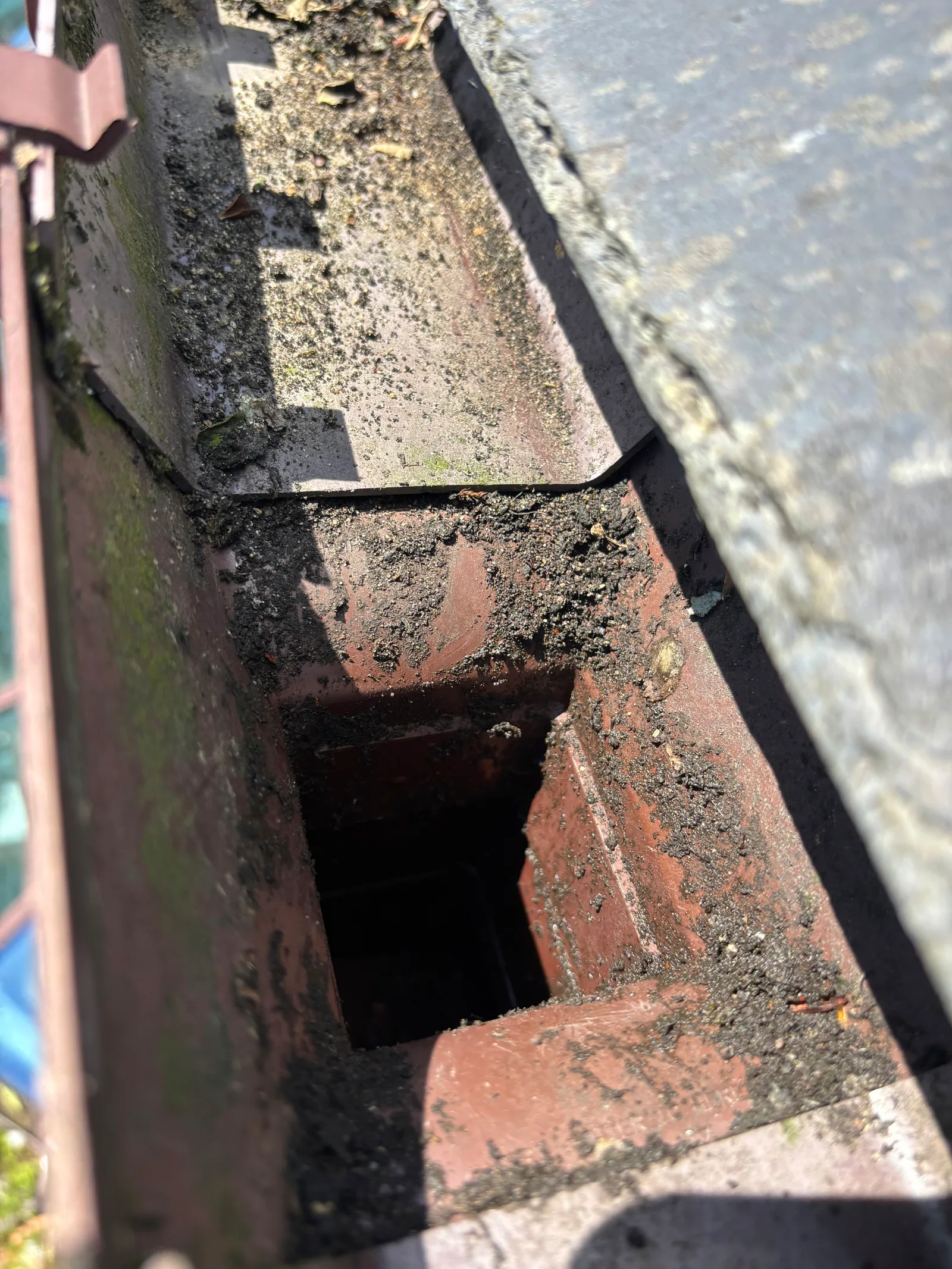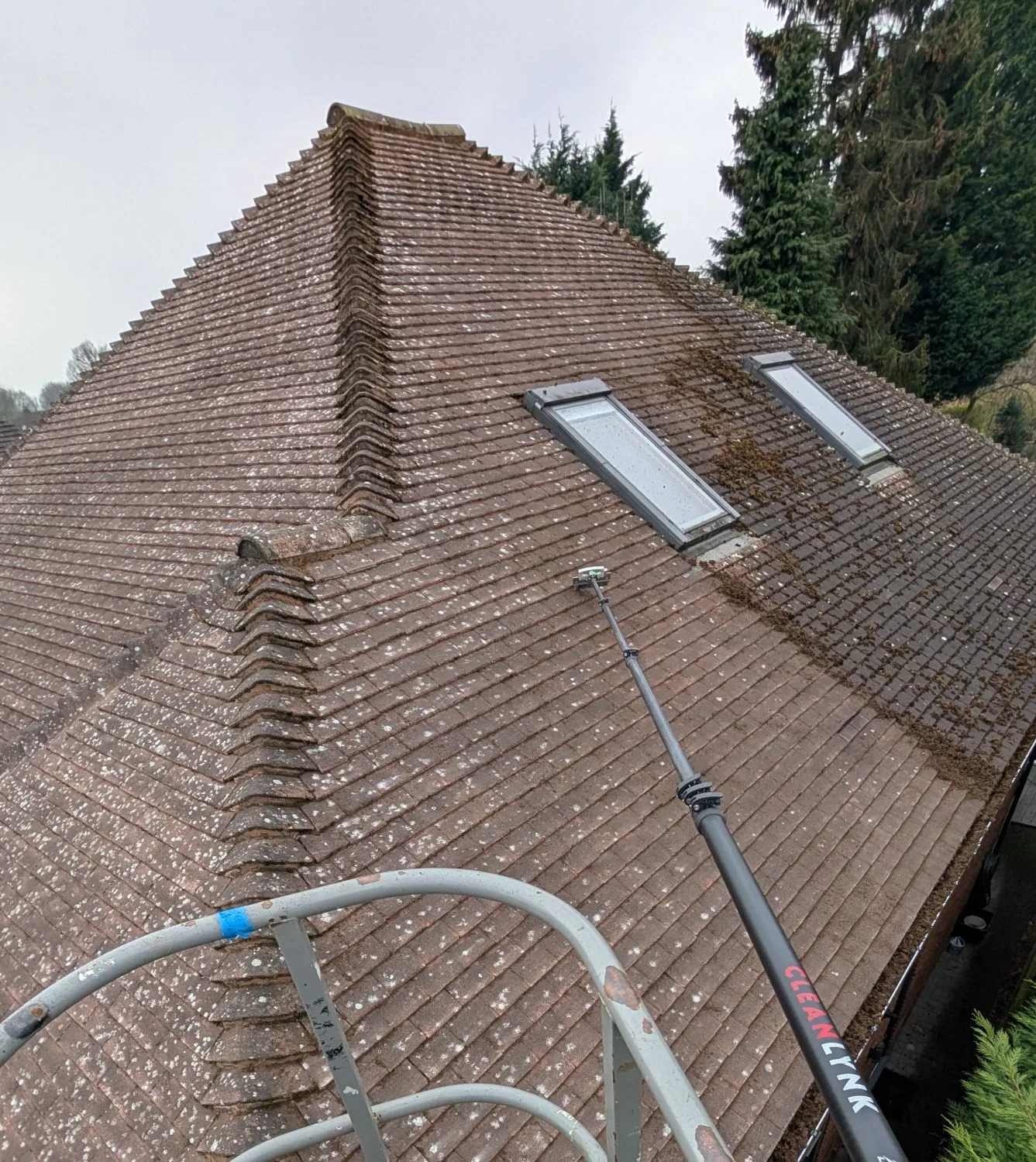
Harrogate’s tree-lined streets and sheltered gardens look great — but they’re a moss magnet. North-facing roofs especially build up heavy growth fast, and once moss gets established it lifts tiles, blocks gutters and holds moisture that cracks tiles in a hard frost. I cover Harrogate and the surrounding area and remove moss by hand, then treat with biocide so it stays clean for years, not months.
Manual roof moss removal in Harrogate refers to the hand-scraping of moss, lichen and organic growth from roof tiles using hand tools — without high-pressure water equipment. Harrogate’s combination of mature tree cover, sheltered gardens and predominantly north-facing rooflines creates ideal conditions for moss growth, often accumulating faster than in more exposed areas. The HG1 postcode and surrounding areas include a wide range of property types: Edwardian terraces, large Victorian detached villas and post-war estates — each with different tile types requiring different handling. Clay plain tiles common on older Harrogate properties are particularly vulnerable to the surface-stripping effect of pressure washing, which removes the granular protective layer and shortens tile lifespan considerably. Manual scraping removes growth without tile damage. Following scraping, a professional-grade biocide is applied which kills remaining spores and prevents moss returning for typically three to five years, though properties close to mature trees may need retreatment sooner.
Every tile inspected before we start. Scraping technique adjusted to the tile type. No shortcuts.
Harrogate has a huge range of property types — Edwardian terraces, large detached Victorian villas, modern estates. Each tile type needs handling differently. Pressure washing is a blunt instrument that strips protective surfaces and forces water under flashings. Manual scraping means every roof gets treated with care regardless of age or tile type.
I inspect every roof before starting work, assess the tile type and moss severity, and use the right technique for your roof. You get before and after photos so you can see exactly what was done. And the biocide treatment means the results last — typically 2–4 years before moss begins to return.
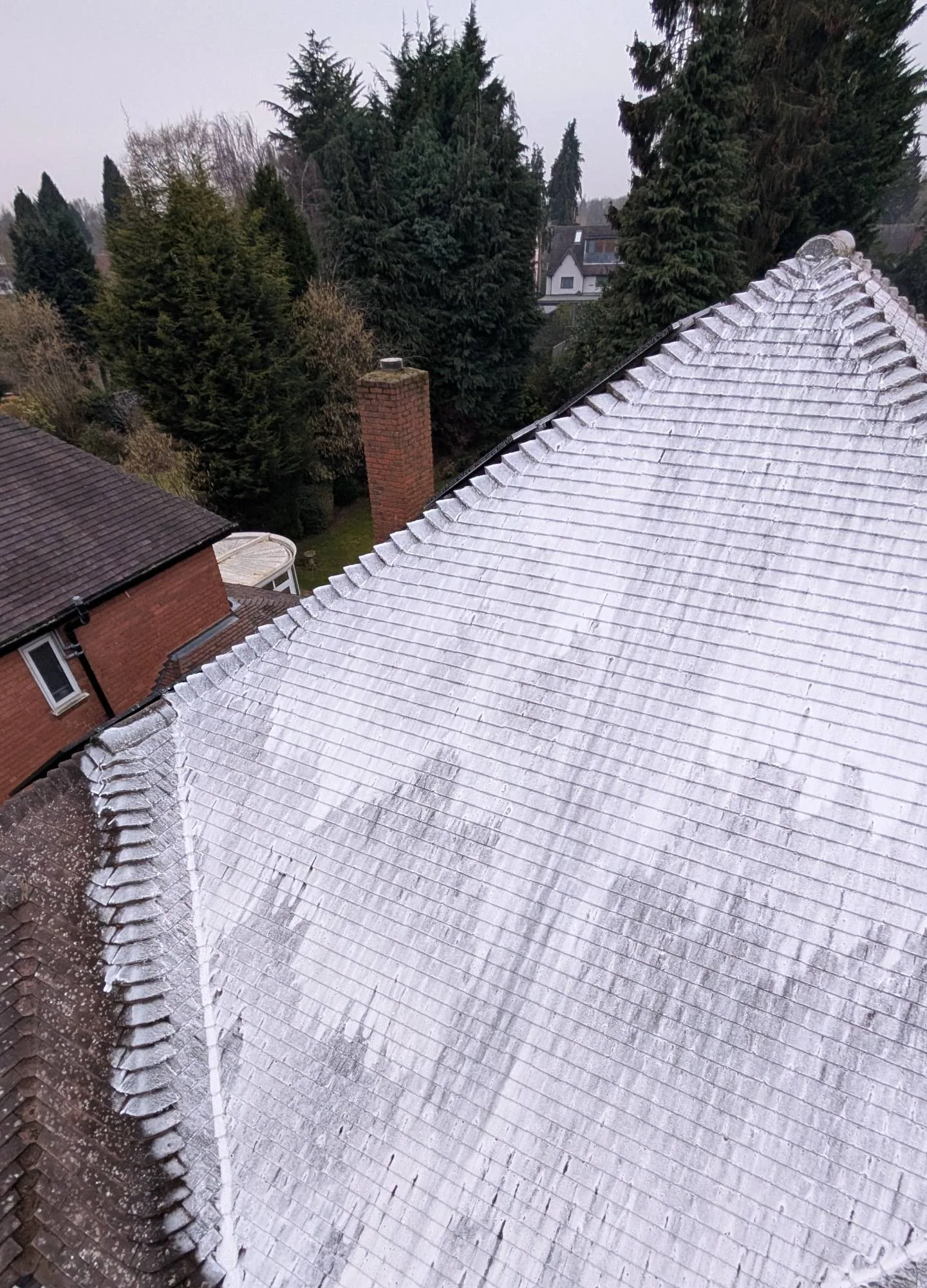
Every roof is different — but here’s what to expect as a guide for Harrogate.
Prices vary with roof access, pitch and condition. Happy to quote from your address in Harrogate.
Typical cost ranges by property size. Final price depends on pitch, access and moss coverage.
| Property type | Approx. roof area | Scraping cost | + Biocide |
|---|---|---|---|
| 2-bed mid-terrace | 40–55 m² | £180–£280 | +£80–£120 |
| 3-bed semi-detached | 55–80 m² | £260–£380 | +£110–£165 |
| 4-bed detached | 80–120 m² | £350–£550 | +£160–£240 |
| Large detached / Victorian | 120 m²+ | £500+ | +£240+ |
Includes gutters cleared of fallen moss and before & after photos. No VAT. Get a free quote →
Pressure washing a roof looks dramatic on a TikTok video. But it strips the protective surface off tiles, forces water under flashings, and can crack older concrete tiles on the spot. Manual scraping is slower, but your roof actually survives the process.
Based locally, so you’re never far from a professional roof clean. I cover all of these areas and beyond.
Covering HG1 and surrounding postcodes
The stuff people actually ask. If yours isn’t here, give me a ring.
Roof cleaning in Harrogate starts from £4 per m² for manual moss scraping, with biocide treatment from £2 per m². Harrogate has a wide range of property sizes — as a rough guide, a two-bedroom terrace typically costs £180–£280 for scraping, a three-bedroom semi-detached £260–£380, and larger detached Victorian or Edwardian properties £400–£700+ depending on roof area, pitch complexity and access. Larger Victorian villas in the HG1–HG2 areas frequently have substantial roof areas with multiple hips and ridges that take considerably longer to work. Biocide treatment is additional at £2–£3/m² and is strongly recommended given Harrogate’s dense tree cover, which contributes to faster moss regrowth. I can usually give an accurate quote from your address alone — most Harrogate properties have good online map coverage to assess access and approximate roof size.
Every 3–5 years is typical for a full scrape and biocide treatment in Harrogate. The town’s density of mature trees is the main factor — properties on well-wooded streets, or backing onto the Stray or Valley Gardens, can see significant moss regrowth within two to three years, particularly on north-facing pitches. South-facing roofs in more open areas may go closer to five years before a full clean is needed, especially if biocide was applied thoroughly after the last clean. The biocide treatment significantly slows regrowth by killing spores and inhibiting germination, but it doesn’t eliminate the need for future cleaning — it extends the interval between cleans. If moss has been established for many years without treatment, the first clean may take longer and cost more due to the depth of growth. After that initial clean, subsequent treatments are usually quicker and less costly.
Yes — Knaresborough, Pannal, Bilton, Starbeck and the surrounding villages are all within my regular working area. Same pricing, same standard of work, same before and after photos. Knaresborough in particular sees heavy moss growth on older stone properties near the gorge, due to the moisture from the river below, and several roofs there are on complex rooflines that need methodical working. Pannal and Burn Bridge have a mix of older detached properties and modern housing; I cover both regularly. Beckwithshaw, Rigton, Follifoot and the smaller villages between Harrogate and Wetherby are also within reach — it’s worth asking even if your village isn’t listed. I’m based in Skipton so I pass through or near most of this area regularly. Get in touch with your address and I’ll turn a quote around quickly.
Get a free, no-obligation quote based on your address. Most quotes back within the hour.