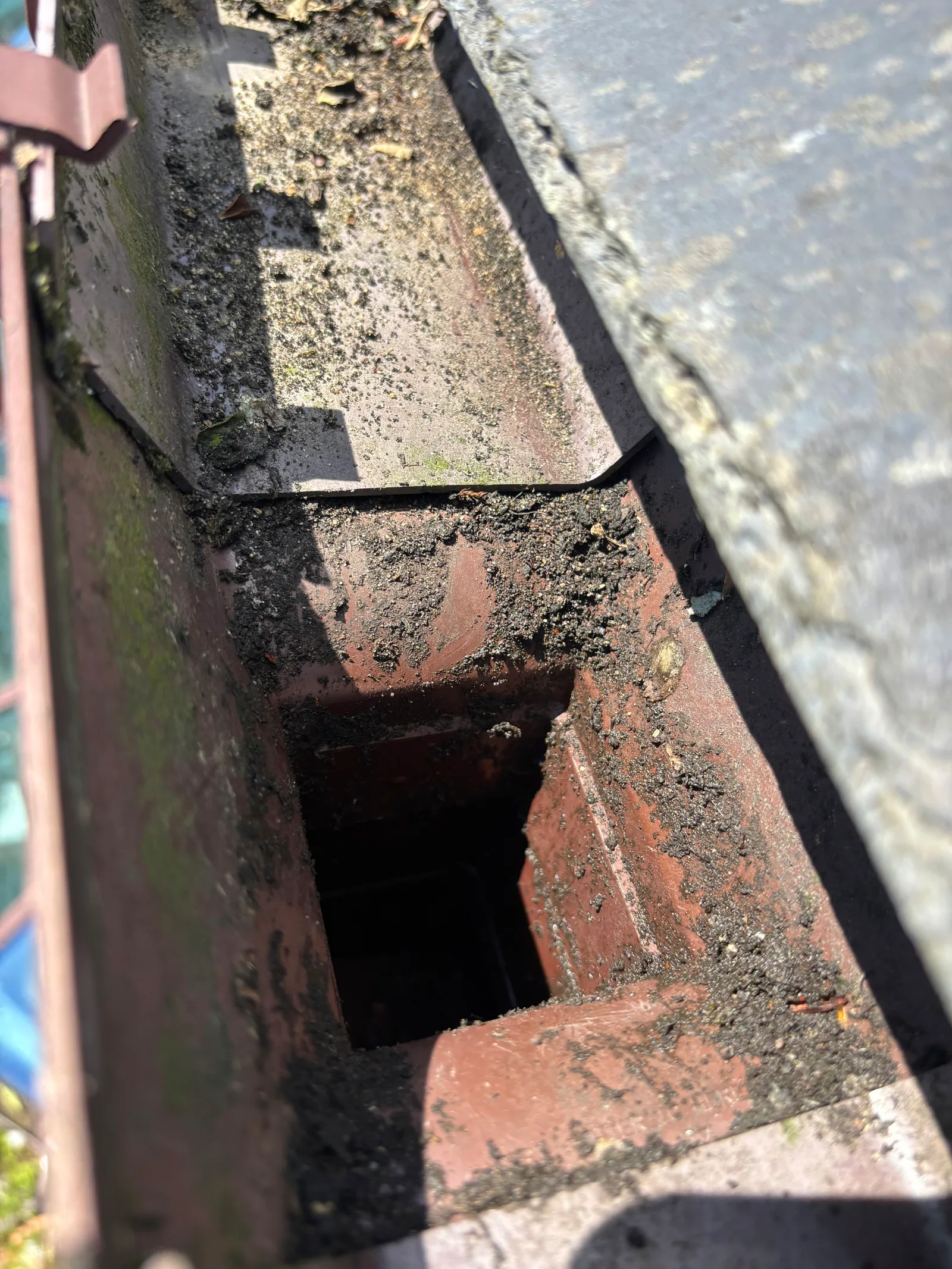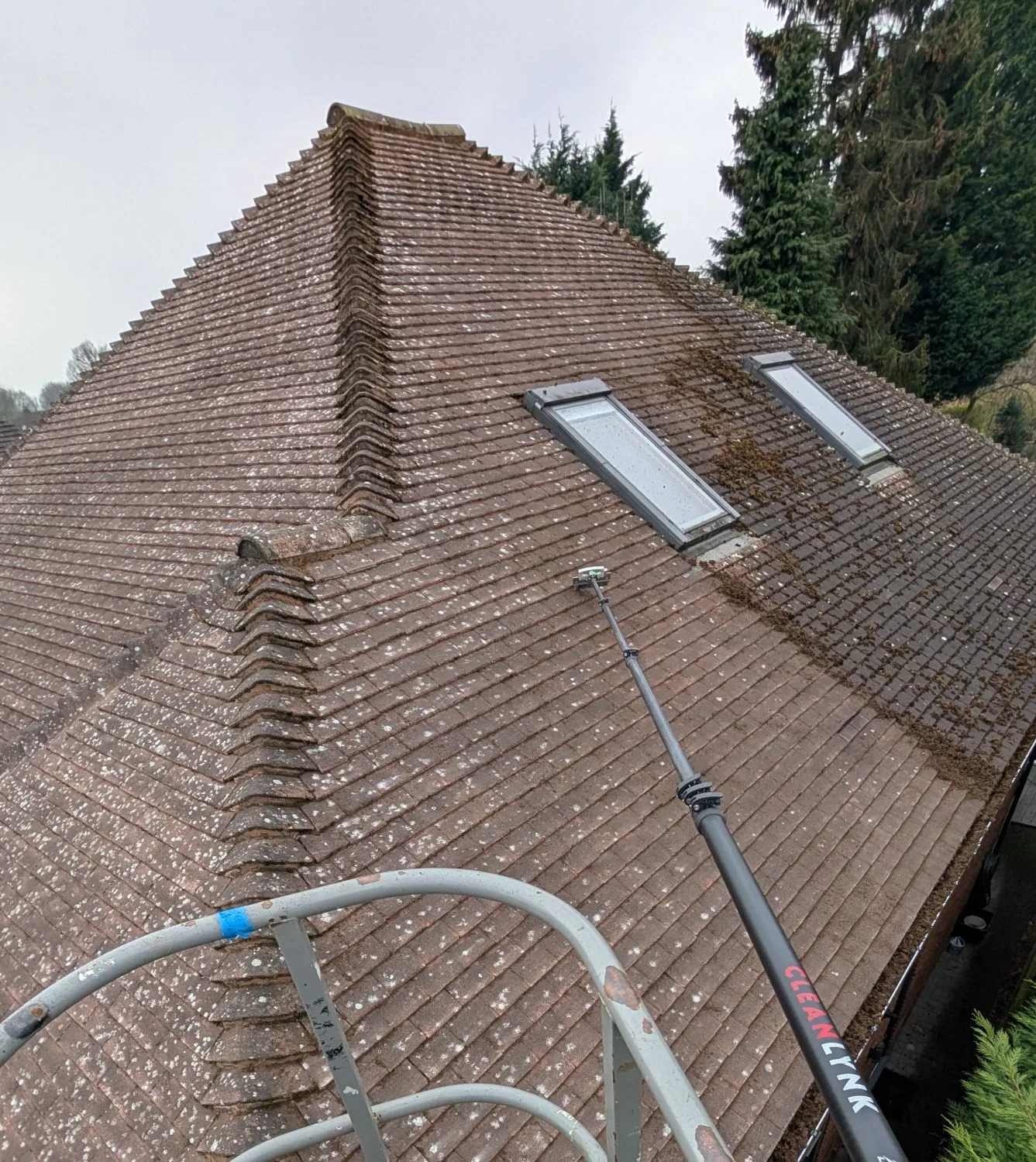
Addingham’s stone cottages and terraces have survived centuries in the Wharfe valley — but the damp, exposed position at the foot of Beamsley Beacon means moss, lichen and algae build up fast. Pressure washing wrecks stone slates. I remove moss by hand, tile by tile, then treat with biocide so your roof stays clean for years. Proper care for roofs that deserve it.
Manual roof moss removal in Addingham means hand-scraping moss, lichen and organic growth from roof tiles and stone slates using hand tools — without any high-pressure water. Addingham’s position in the Wharfe valley, at the foot of Beamsley Beacon, brings high rainfall and persistent dampness that makes moss thrive on almost every roof surface. The village has a high concentration of 18th and 19th century stone-built cottages and terraces, many with original stone slate roofs that are irreplaceable and extremely vulnerable to pressure washing. Even the concrete and clay tiles on later Victorian and modern properties along Main Street and the village edges suffer when blasted — the protective granular surface gets stripped, shortening tile life by years. Manual scraping removes every scrap of growth without cracking, chipping or dislodging a single slate. After scraping, a professional-grade biocide is applied to kill remaining spores and inhibit regrowth for typically three to five years — critical in Addingham’s wet microclimate where untreated roofs can see moss return within eighteen months.
Every tile inspected before we start. Scraping technique adjusted to the tile type. No shortcuts.
Addingham’s village centre sits within a conservation area, and many of the stone slate roofs here are original — some dating back over two hundred years. These aren’t mass-produced concrete tiles; they’re hand-cut stone slates, heavy, uneven, and held in place by lime mortar and wooden pegs. Pressure washing doesn’t just strip the surface — it can dislodge slates entirely, blast out pointing, and force water into the roof structure where it causes rot and damp.
I inspect every roof before starting, assess the slate or tile type and the severity of growth, then use the right scraping technique for your roof. You get before and after photos so you can see exactly what was done. The exposed position at the foot of Beamsley Beacon means Addingham roofs take a hammering from wind and rain — biocide treatment after scraping is essential here to get the longest possible interval between cleans.
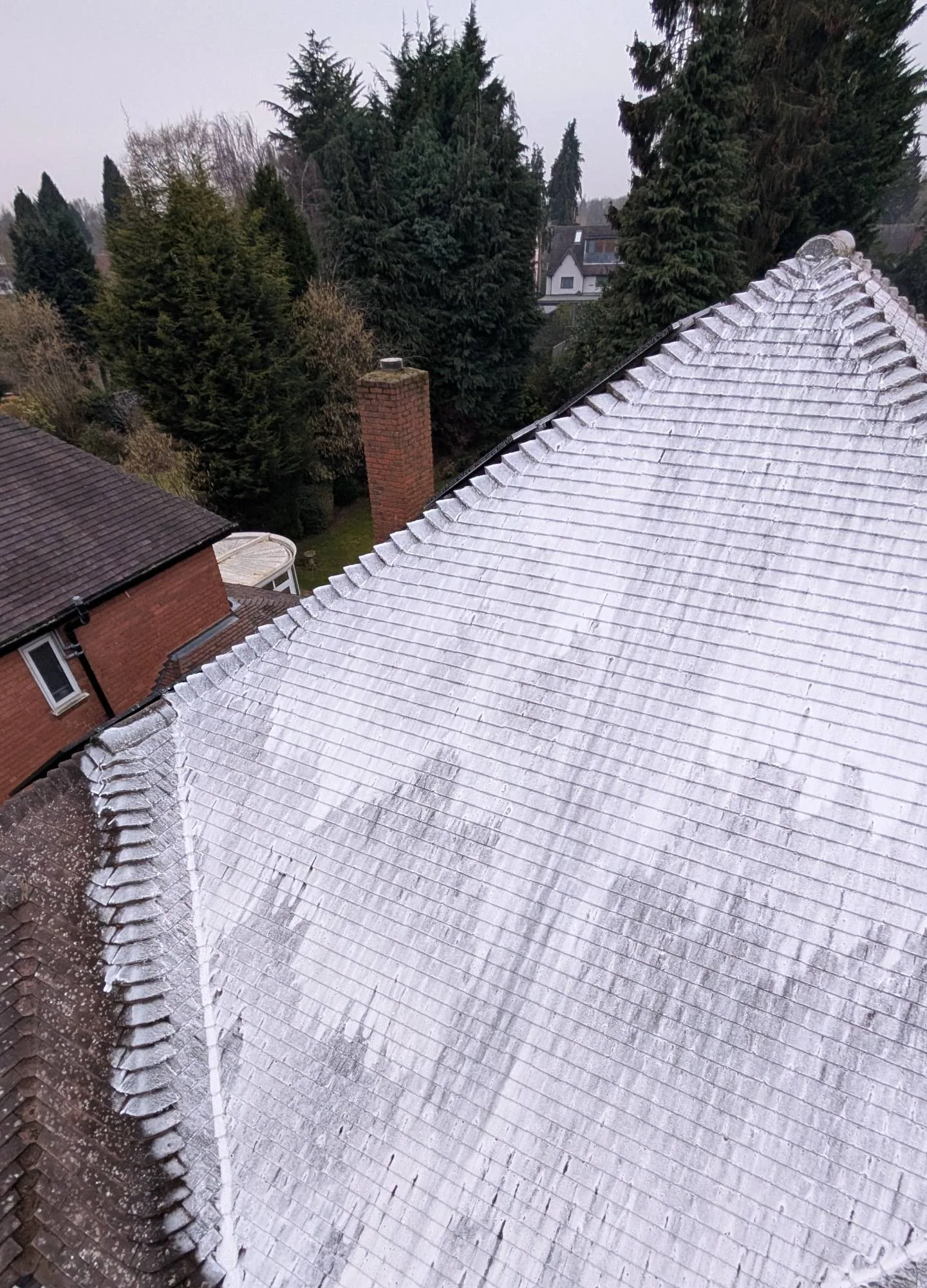
Every roof is different — but here’s what to expect as a guide for Addingham.
Prices vary with roof access, pitch and condition. Happy to quote from your address in Addingham.
Typical cost ranges by property size. Final price depends on pitch, access and moss coverage.
| Property type | Approx. roof area | Scraping cost | + Biocide |
|---|---|---|---|
| 2-bed stone cottage (Main St / Back Lane) | 35–50 m² | £200–£320 | +£70–£110 |
| 3-bed Victorian terrace (Main Street) | 50–75 m² | £280–£400 | +£100–£160 |
| 3–4 bed detached (village edges) | 75–110 m² | £340–£520 | +£150–£220 |
| Large stone-built / period property | 110 m²+ | £480+ | +£220+ |
Includes gutters cleared of fallen moss and before & after photos. No VAT. Get a free quote →
Pressure washing a roof looks dramatic on a TikTok video. But it strips the protective surface off tiles, forces water under flashings, and can crack older concrete tiles on the spot. On Addingham’s stone slate roofs, the damage is even worse — pressure washing can dislodge slates entirely and blast out centuries-old lime mortar. Manual scraping is slower, but your roof actually survives the process.
Based locally, so you’re never far from a professional roof clean. I cover all of these areas and beyond.
Covering LS29 postcode area and the wider Wharfedale
The stuff people actually ask. If yours isn’t here, give me a ring.
Roof cleaning in Addingham starts from £4 per m² for manual moss scraping, with biocide treatment from £2 per m². A typical two-bedroom stone cottage along Main Street or Back Lane costs £200–£320 for scraping, a three-bedroom terraced or semi-detached property £280–£400, and larger detached properties on the village outskirts £400–£650+ depending on roof area and access. Many older Addingham properties have stone slate roofs, which require particularly careful handling due to their weight and fragility — these can take longer to work than standard concrete tiles. Biocide treatment is additional at £2–£3/m² and is especially worthwhile in Addingham given the high rainfall in the Wharfe valley, which accelerates moss regrowth. I can usually quote from your address alone — just send it over and I’ll get back to you quickly.
Yes — stone slate roofs are one of the main roof types I work on in Addingham and the wider Wharfedale area. These roofs absolutely cannot be pressure washed. The stone slates are heavy but brittle, and high-pressure water can crack them, dislodge pointing, and force water into the roof structure. Manual scraping is the only safe method. I work across each slate carefully with hand tools, removing moss and lichen without disturbing the slates or their fixings. Many of these roofs in Addingham’s conservation area are original 18th or 19th century stone, and preserving them is essential — both for the property’s character and to avoid expensive re-slating. After scraping, biocide treatment kills remaining spores and slows regrowth significantly. If any slates are slipped or cracked, I’ll flag them during the inspection so you can arrange repair.
Yes — Ilkley, Bolton Abbey, Beamsley, Draughton, Chelker and the surrounding villages are all within my regular working area. Addingham sits right on my route between Skipton and Ilkley on the A65, so it’s one of the most convenient areas for me to reach. Ilkley has a wide range of Victorian and Edwardian properties with complex rooflines, while Bolton Abbey and Beamsley tend towards stone-built cottages and farmhouses with stone slate or concrete tile roofs. Same pricing, same standard of work, same before and after photos wherever you are. If your village isn’t listed, it’s still worth asking — I cover most of the Wharfe valley regularly.
Addingham sits at the foot of Beamsley Beacon in the Wharfe valley, which means it gets higher-than-average rainfall and the village is often damp for extended periods. The combination of moisture, sheltered roof pitches and the rough texture of stone slate roofs creates ideal conditions for moss, lichen and algae. North-facing pitches on properties along Main Street and the older lanes can develop thick moss growth within just two to three years of cleaning. The village’s exposed position also means roofs take a battering from wind-driven rain, which keeps surfaces wet for longer. Biocide treatment after scraping is strongly recommended here — it kills spores at the root level and can extend the time between cleans from two years to four or five, even in Addingham’s wet microclimate.
Get a free, no-obligation quote based on your address. Most quotes back within the hour.