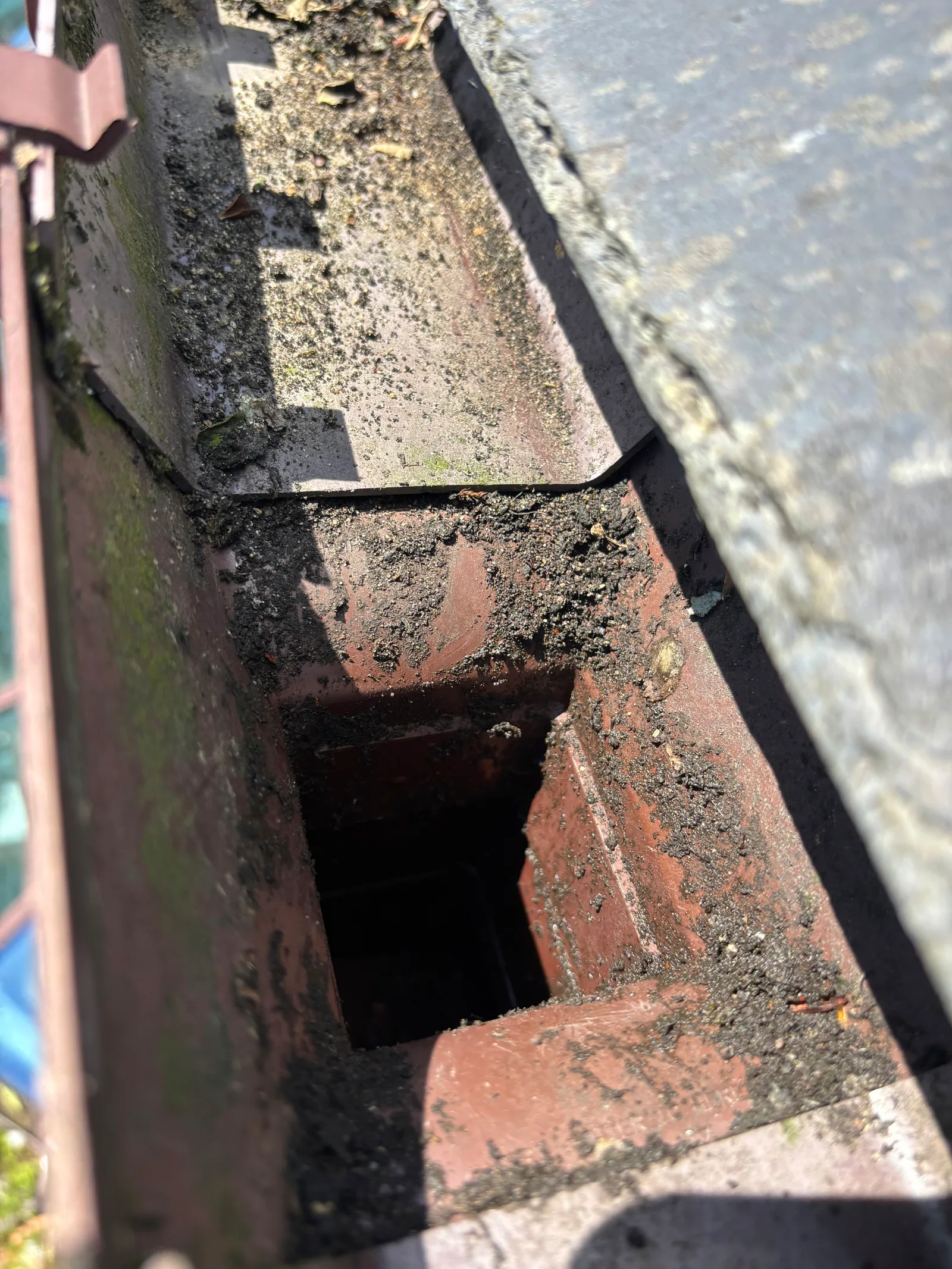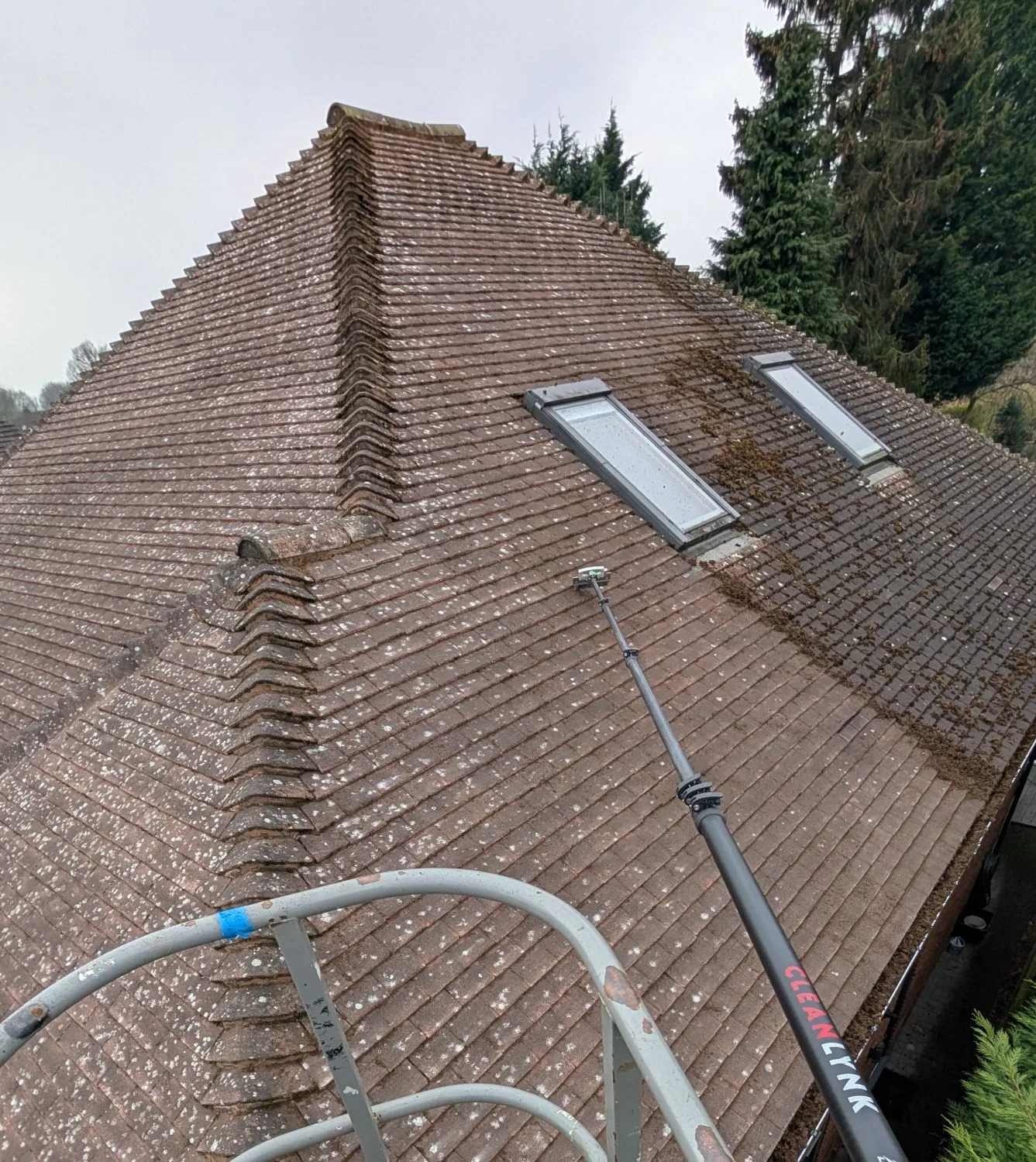
Settle’s stone-built properties and exposed Dales hillsides are about as moss-friendly as it gets — high altitude, prevailing westerly winds, and north-facing slopes that never fully dry out. Once moss gets established it lifts tiles, blocks gutters and holds moisture that cracks your roof in a hard winter frost. I cover Settle, Giggleswick and the surrounding Craven area from my base in Skipton. I remove moss by hand — no pressure washers — and treat with biocide so it stays clean for years.
Manual roof moss removal in Settle refers to the hand-scraping of moss, lichen and biological growth from roof tiles without high-pressure water. Settle’s traditional Dales stone properties in the BD24 postcode area are particularly prone to heavy moss accumulation due to the town’s elevation and high rainfall. These older stone-built homes with traditional clay or natural slate tiles are especially vulnerable to pressure washing damage. Moss at this altitude retains significant moisture and, combined with frequent freeze-thaw cycles, gradually undermines the tile bedding. Manual scraping removes growth safely and is followed by biocide that inhibits regrowth for two to four years.
Every tile inspected before we start. Scraping technique adjusted to the tile type. No shortcuts.
Skipton has a lot of older stone properties and traditional clay and concrete tiles. Pressure washing looks impressive but it strips the protective surface off tiles and forces water under flashings. Round here that’s a real problem in winter. Manual scraping is slower but your roof comes out of it intact.
I inspect every roof before starting work, assess the tile type and moss severity, and use the right technique for your roof. You get before and after photos so you can see exactly what was done. And the biocide treatment means the results last — typically 2–4 years before moss begins to return.
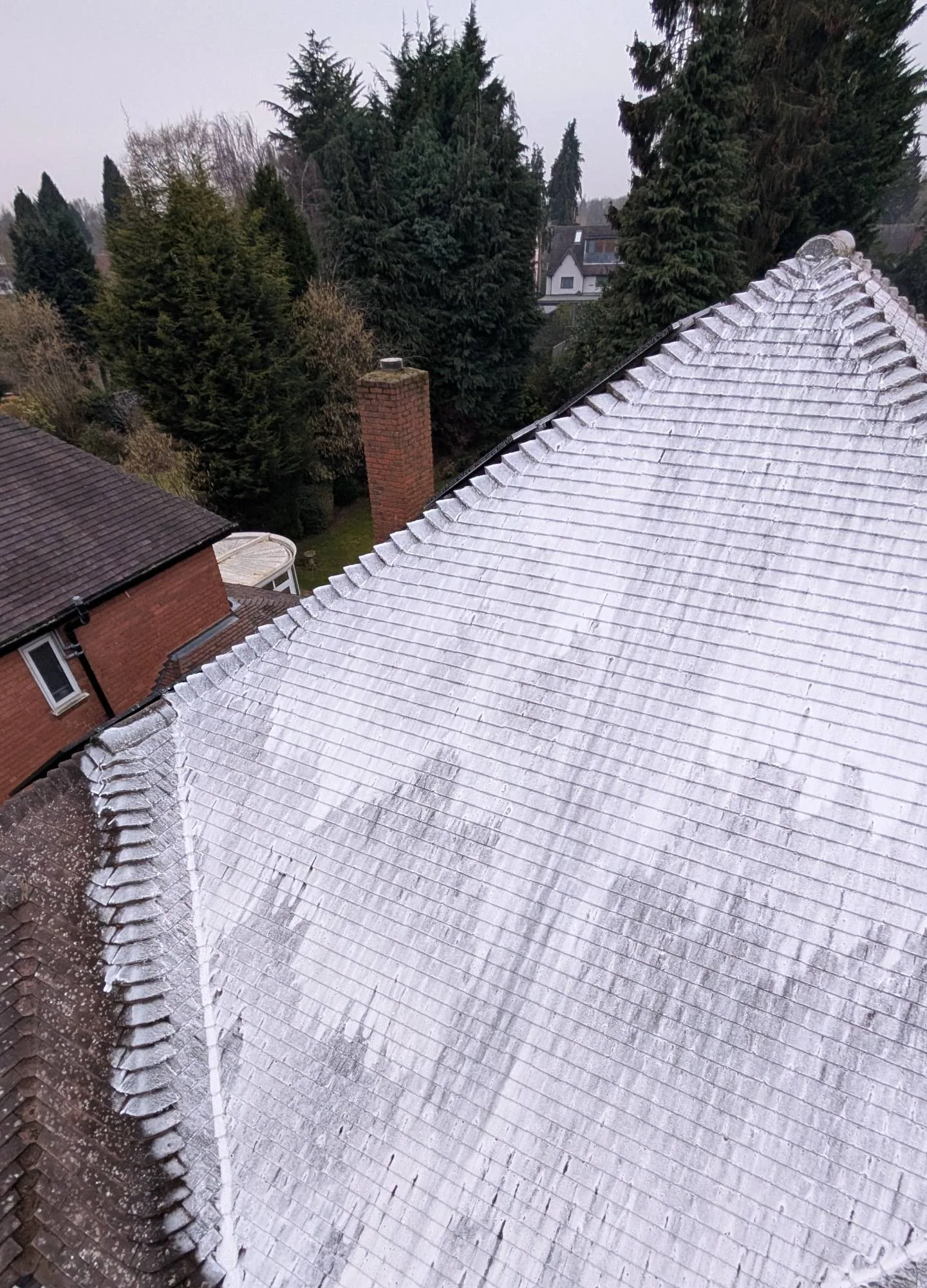
Every roof is different — but here’s what to expect as a guide for Settle.
Prices vary with roof access, pitch and condition. Prices vary with roof access, pitch and condition. Happy to quote from your address in Settle or the surrounding Dales.
Typical cost ranges by property size. Final price depends on pitch, access and moss coverage.
| Property type | Approx. roof area | Scraping cost | + Biocide |
|---|---|---|---|
| 2-bed mid-terrace | 40–55 m² | £180–£280 | +£80–£120 |
| 3-bed semi-detached | 55–80 m² | £260–£380 | +£110–£165 |
| 4-bed detached | 80–120 m² | £350–£550 | +£160–£240 |
| Large detached / Victorian | 120 m²+ | £500+ | +£240+ |
Includes gutters cleared of fallen moss and before & after photos. No VAT. Get a free quote →
Pressure washing a roof looks dramatic on a TikTok video. But it strips the protective surface off tiles, forces water under flashings, and can crack older concrete tiles on the spot. Manual scraping is slower, but your roof actually survives the process.
Based in Skipton, so Settle and the surrounding Dales are a short drive. I cover all of these areas.
Covering BD24, LA2 and surrounding postcodes
The stuff people actually ask. If yours isn’t here, give me a ring.
Roof cleaning in Settle starts from £4 per m² for manual moss scraping, with biocide treatment from £2 per m². A two-bedroom cottage or terrace typically costs £180–£280 for scraping, a three-bedroom semi £260–£380, and a larger Dales property £350–£600+ depending on pitch and access. Settle’s older stone properties often have steeper pitches and complex rooflines. I can usually give a reliable quote from your address — no site visit needed.
Pressure washing strips the protective surface off tiles and forces water under flashings — at altitude in the Dales, where freeze-thaw cycles are frequent, this causes serious tile cracking. Settle’s traditional stone properties often have older clay or natural slate tiles that are irreplaceable and especially vulnerable. Manual scraping takes more time but your roof is in better condition afterwards, not worse.
Typically 2–3 years in Settle. At this altitude with prevailing westerly winds carrying moisture off the Dales, and north-facing slopes that rarely see direct sun, moss returns faster than in lower Yorkshire. Properties with south-facing aspects may get closer to 3–4 years, but elevated or exposed properties should plan for retreatment around the 2-year mark.
Get a free, no-obligation quote based on your address. Most quotes back within the hour.