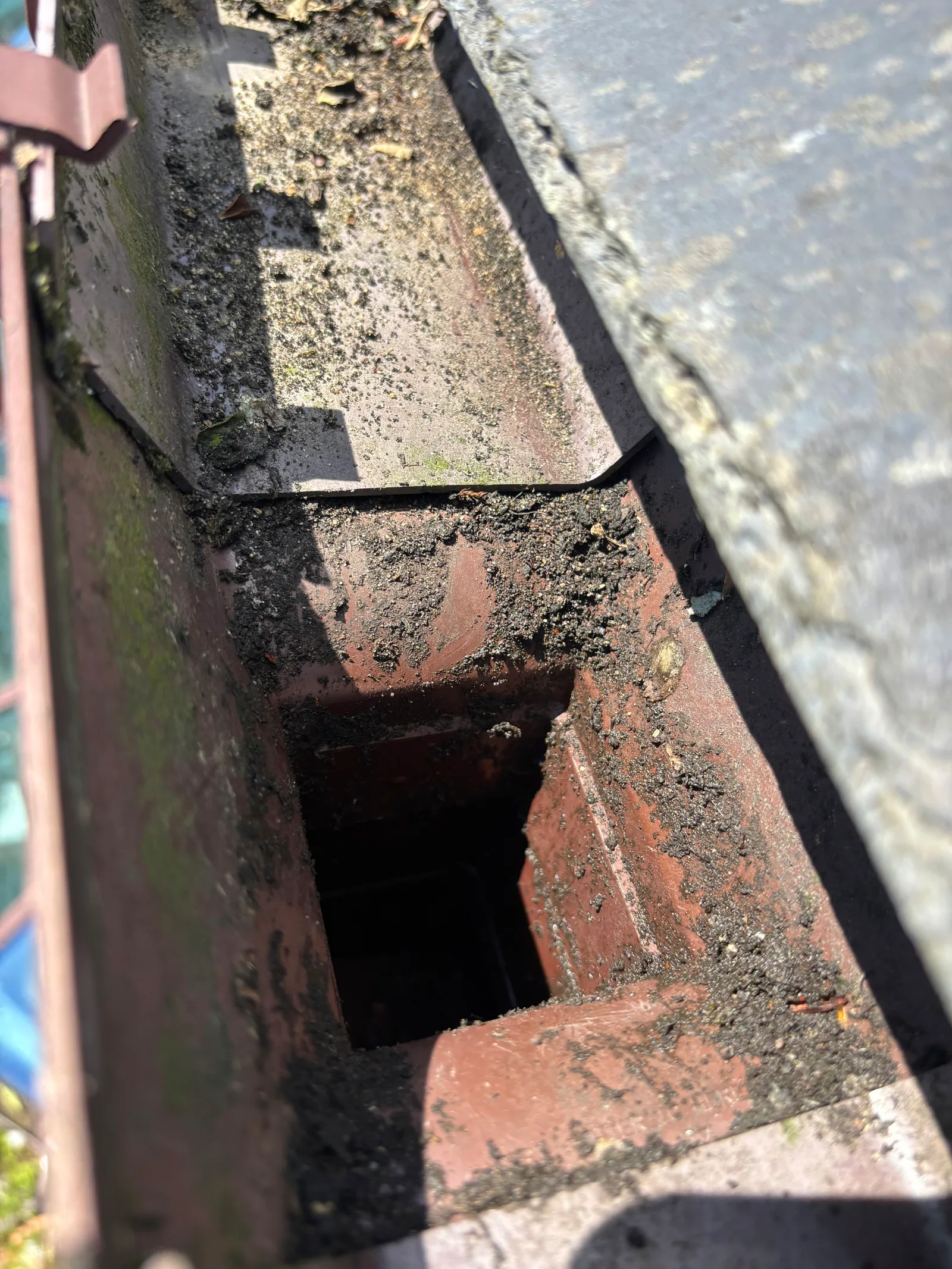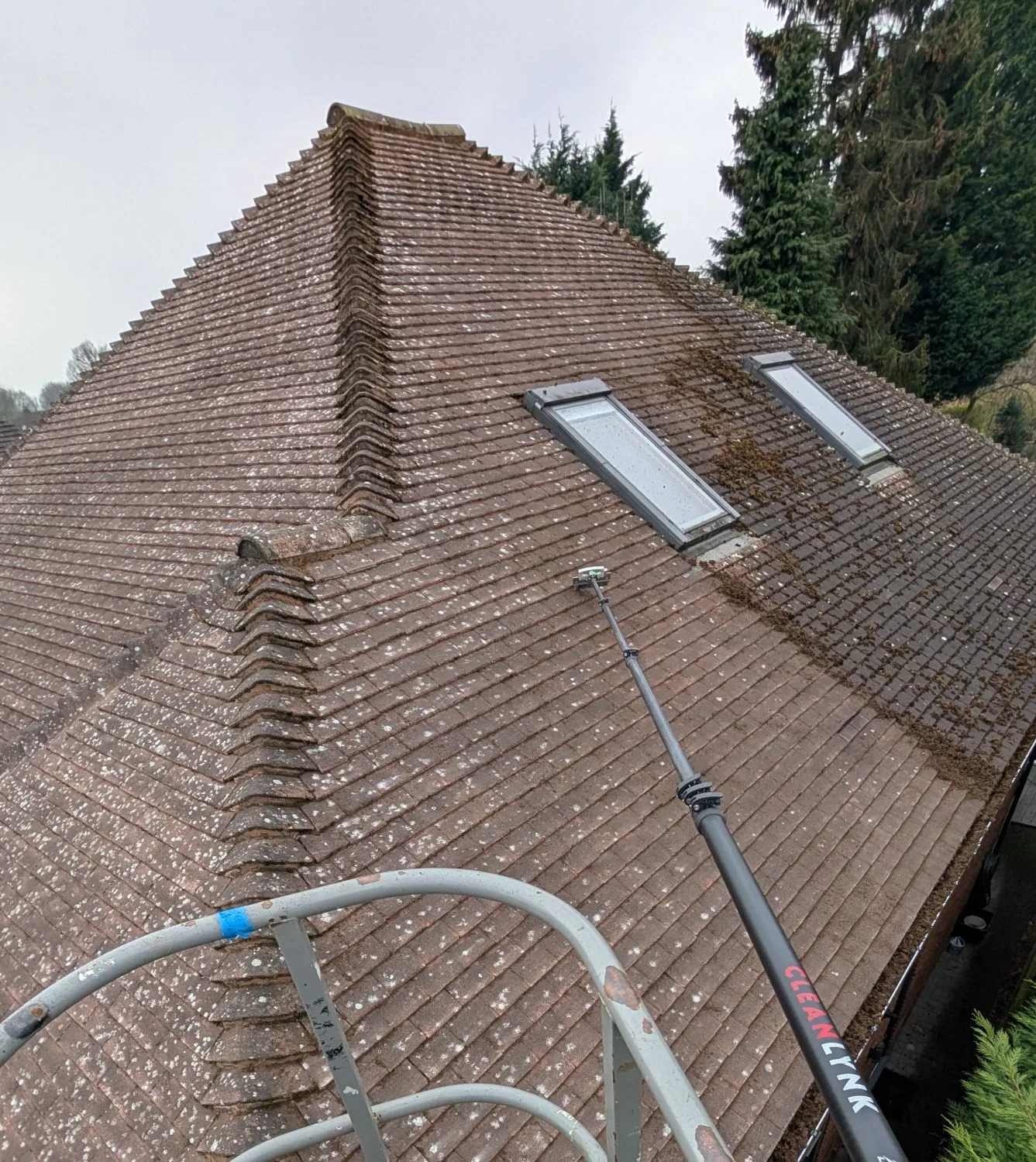
Barnoldswick sits exposed on the Pennine edge — high rainfall, driving wind and damp conditions year-round. The dense stone terraces from the mill era and older stone slate roofs take the brunt of it, and moss establishes fast on north-facing pitches. I remove moss by hand, treat with biocide and leave your roof clean for years, not months. No pressure washing, no tile damage.
Manual roof moss removal in Barnoldswick means hand-scraping moss, lichen and organic growth from roof tiles using hand tools — no high-pressure water equipment. Barnoldswick’s exposed Pennine position, high annual rainfall and persistent damp create conditions where moss grows aggressively on almost every roof orientation, though north-facing pitches on the terraced rows are worst affected. The BB18 postcode is dominated by dense stone-built terraces dating from the cotton mill era, many with traditional stone slate roofs that are particularly vulnerable to damage from pressure washing. These stone slates are bedded on lime mortar and depend on their natural overlap and weight to keep water out — pressure washing disrupts both. Older Victorian and Edwardian properties around the town centre have larger, more complex roof areas, while modern estates on the edges of town use concrete interlocking tiles that handle differently again. Manual scraping is the only method that adapts to each roof type without causing damage. Following scraping, a professional-grade biocide is applied to kill remaining spores and prevent moss returning for typically three to five years — though Barnoldswick’s windy, wet climate means properties in the most exposed spots may benefit from retreatment at the shorter end of that range.
Every tile inspected before we start. Scraping technique adjusted to the tile type. No shortcuts.
Barnoldswick’s housing stock is heavily weighted towards stone-built terraces from the cotton mill period. These properties have stone slate roofs, tight access between rows and often steep pitches — none of which suit pressure washing. The exposed hilltop position means wind-driven rain keeps tiles damp for longer, and the constant moisture cycle accelerates moss growth well beyond what you’d see in more sheltered towns. Manual scraping is the only method that works safely on stone slate without dislodging mortar or forcing water into the roof structure.
I inspect every roof before starting work, assess the tile type and condition, and use the right technique for your roof. Stone slates get treated with particular care — they’re irreplaceable on many older Barlick properties. You get before and after photos so you can see exactly what was done. And the biocide treatment means the results last — even in Barnoldswick’s challenging climate.
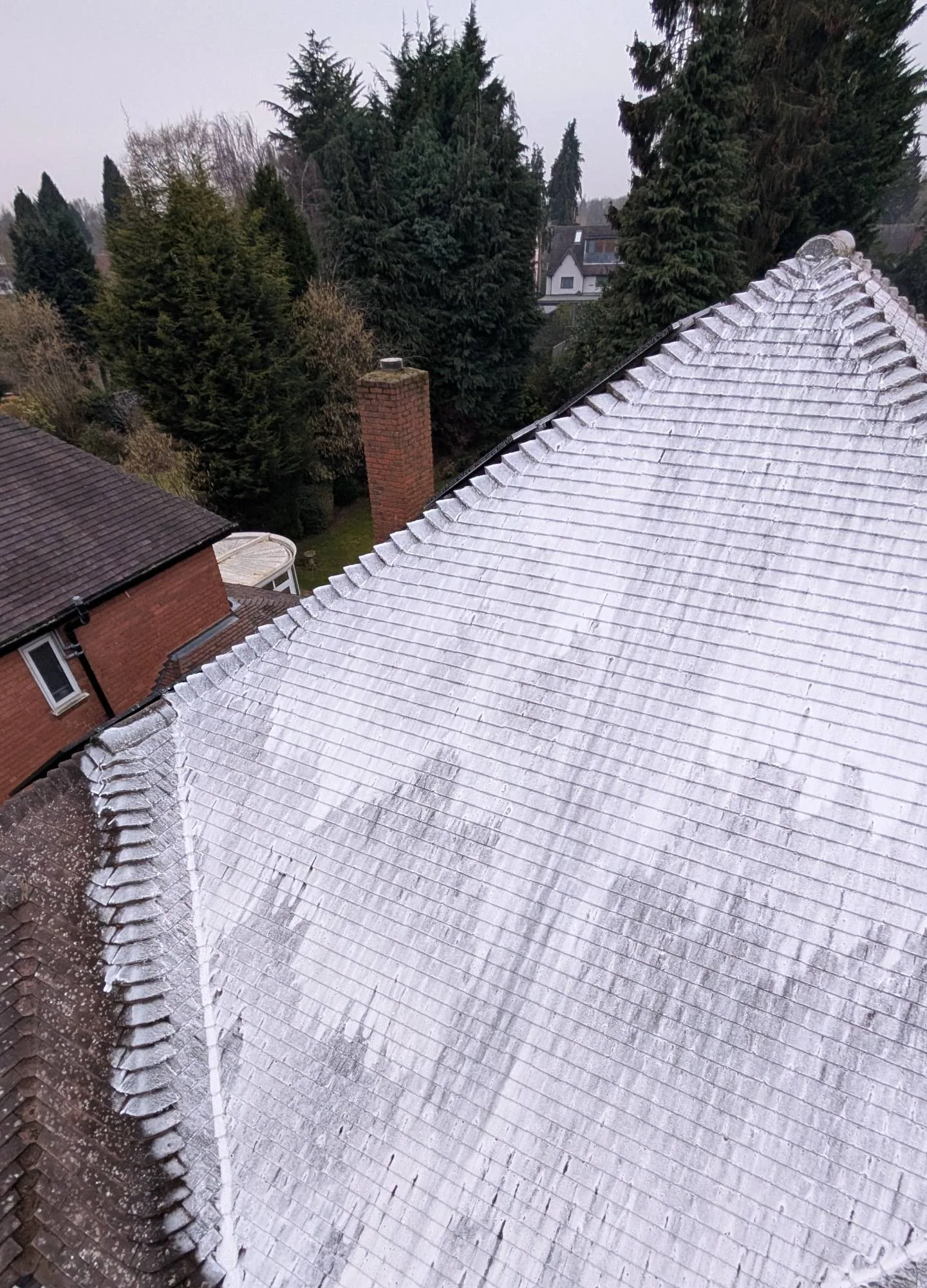
Every roof is different — but here’s what to expect as a guide for Barnoldswick.
Prices vary with roof access, pitch and condition. Happy to quote from your address in Barnoldswick.
Typical cost ranges by property size. Final price depends on pitch, access and moss coverage.
| Property type | Approx. roof area | Scraping cost | + Biocide |
|---|---|---|---|
| 2-bed stone terrace (mill era) | 35–50 m² | £170–£260 | +£70–£110 |
| 3-bed end-terrace / semi | 50–75 m² | £250–£370 | +£100–£155 |
| Victorian / Edwardian detached | 75–110 m² | £340–£520 | +£150–£230 |
| Modern detached (edge estates) | 80–120 m² | £350–£550 | +£160–£240 |
Includes gutters cleared of fallen moss and before & after photos. No VAT. Get a free quote →
Pressure washing a roof looks dramatic on a TikTok video. But it strips the protective surface off tiles, forces water under flashings, and can crack older concrete tiles on the spot. Manual scraping is slower, but your roof actually survives the process.
Based in Skipton — just fifteen minutes away. Barnoldswick and the surrounding area is one of my closest patches.
Covering the BB18 postcode and surrounding villages
The stuff people actually ask. If yours isn’t here, give me a ring.
Roof cleaning in Barnoldswick starts from £4 per m² for manual moss scraping, with biocide treatment from £2 per m². Barnoldswick is predominantly terraced housing from the mill era — a two-bedroom stone terrace typically costs £170–£260 for scraping, a three-bedroom end-terrace or semi £250–£370, and the larger Victorian or Edwardian properties £400–£600+ depending on roof area and access. Stone slate roofs, which are common on older Barlick properties, take longer to scrape carefully and sit at the higher end of the per-metre rate. Biocide is additional at £2–£3/m² and is strongly recommended given how exposed Barnoldswick is to Pennine weather — it slows regrowth significantly. Send me your address and I’ll get a quote back to you quickly.
Not with manual scraping — that’s precisely why I don’t use pressure washers. Many older Barnoldswick properties have traditional stone slate roofs from the mill era, and these are far more delicate than modern interlocking concrete tiles. Pressure washing forces water under the slates, dislodges pointing and can crack the stone itself. Manual scraping works with the natural lay of the slate, removing moss growth without disturbing the bedding or forcing moisture into the roof structure. It’s slower, but it’s the only method that makes sense for stone slate. After scraping I apply a biocide that kills remaining spores and prevents regrowth — extending the time between cleans and reducing the total handling your roof receives over its lifetime.
Yes — Earby, Kelbrook, Salterforth, Thornton-in-Craven, Coates and Bracewell are all within my regular working area. Same pricing and same standard of work. Earby in particular has a lot of stone terraces similar to Barnoldswick that see heavy moss growth on north-facing pitches. Kelbrook and Salterforth are smaller but I work there regularly. I’m based in Skipton, which is only fifteen minutes from Barnoldswick, so the whole BB18 area is one of my closest patches. Get in touch with your address and I’ll turn a quote around quickly.
Every 3–5 years is typical for a full scrape and biocide treatment in Barnoldswick. The town’s exposed Pennine position means roofs take a real battering from wind-driven rain, which keeps tiles damp and encourages rapid moss growth. North-facing pitches on the terraced rows can build up heavy moss in as little as two years, especially on properties that back onto open ground. South-facing or more sheltered roofs may go closer to five years between cleans. Biocide treatment after scraping is the most effective way to extend the interval — it kills spores at the surface and slows regrowth considerably. The first clean after years of neglect is usually the heaviest and most expensive; subsequent maintenance cleans are quicker and cheaper.
Get a free, no-obligation quote based on your address. Most quotes back within the hour.