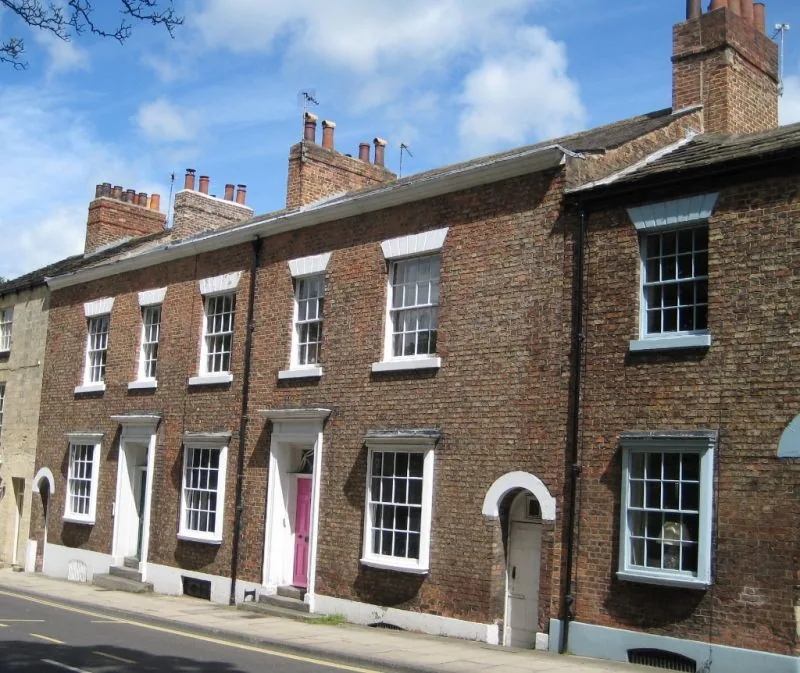
Listed buildings need a different approach. The methods that work fine on a modern concrete tile — pressure washing, aggressive scraping — can do real damage to original stone slate, stripping the natural patina and leaving the surface more porous and vulnerable than before. This job in Knaresborough is a good example of why it matters to get that right.
The Property
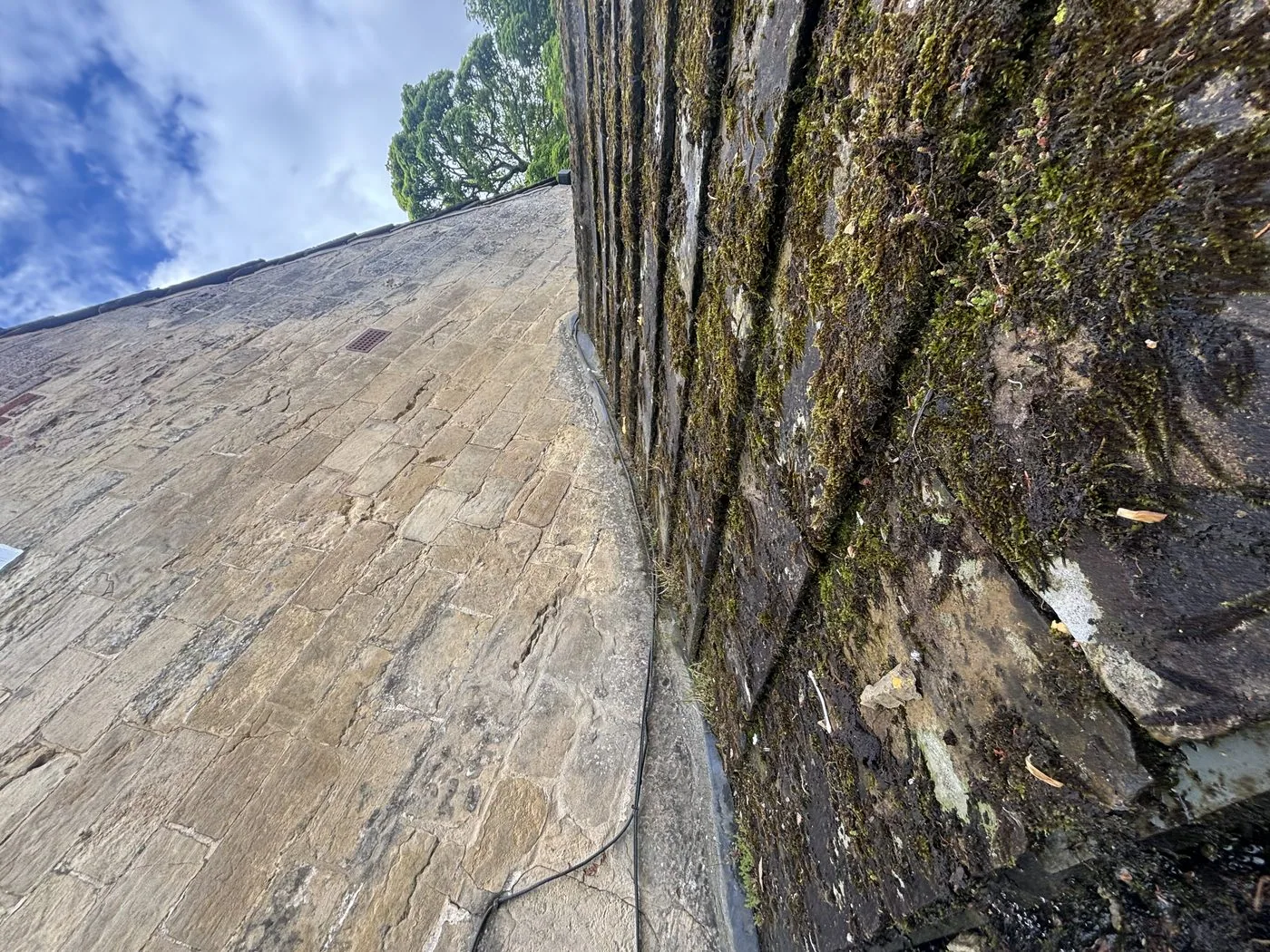
118 High Street is part of a late 18th century terrace — Grade II listed, Historic England ref 1149881. The roof is original stone slate, which is exactly what you'd hope to see on a building of that age. The problem was significant moss and lichen growth across the whole roof, worst in the sections sitting directly beneath the tree line.
A previous contractor had scraped the roof a couple of years earlier but hadn't applied any biocide afterwards. Without a biocidal treatment to prevent recolonisation, the growth came straight back — and because the scraping had left the stone more exposed, it came back faster than it would have done on an untreated surface.
Why Not Pressure Wash?
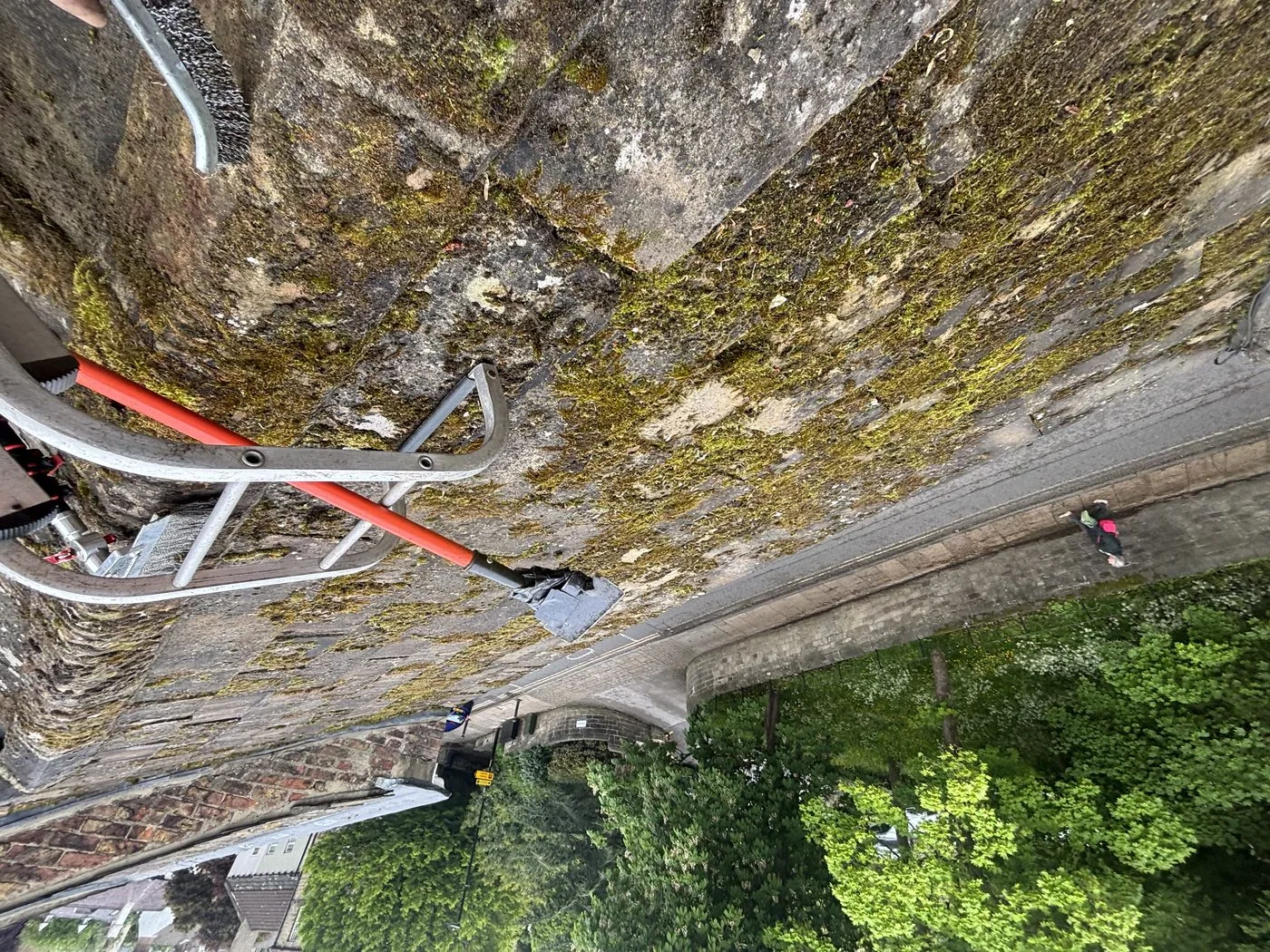
It comes up a lot. Pressure washing is fast and the results look dramatic, which makes it an easy sell. But on original stone slate, it strips the patina — that surface layer the stone develops over decades — and leaves the material porous and exposed. On a listed building where the original fabric is part of the heritage value, that's not an acceptable trade-off.
The same applies to hard scraping. You can get a roof looking clean quickly with an aggressive scrape, but you're abrading the stone surface in the process. The growth comes back sooner, and you've shortened the lifespan of the tiles.
What We Did
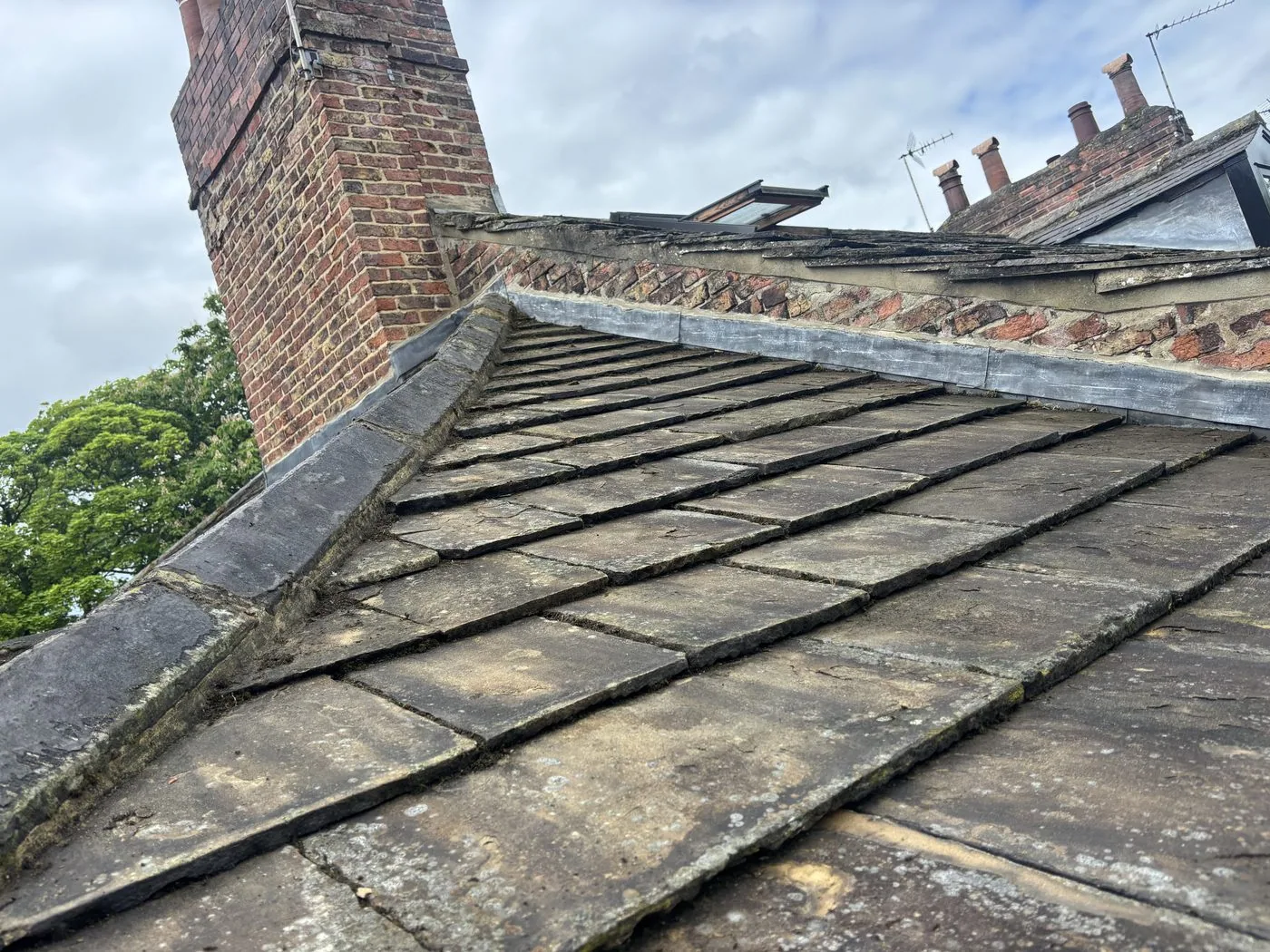
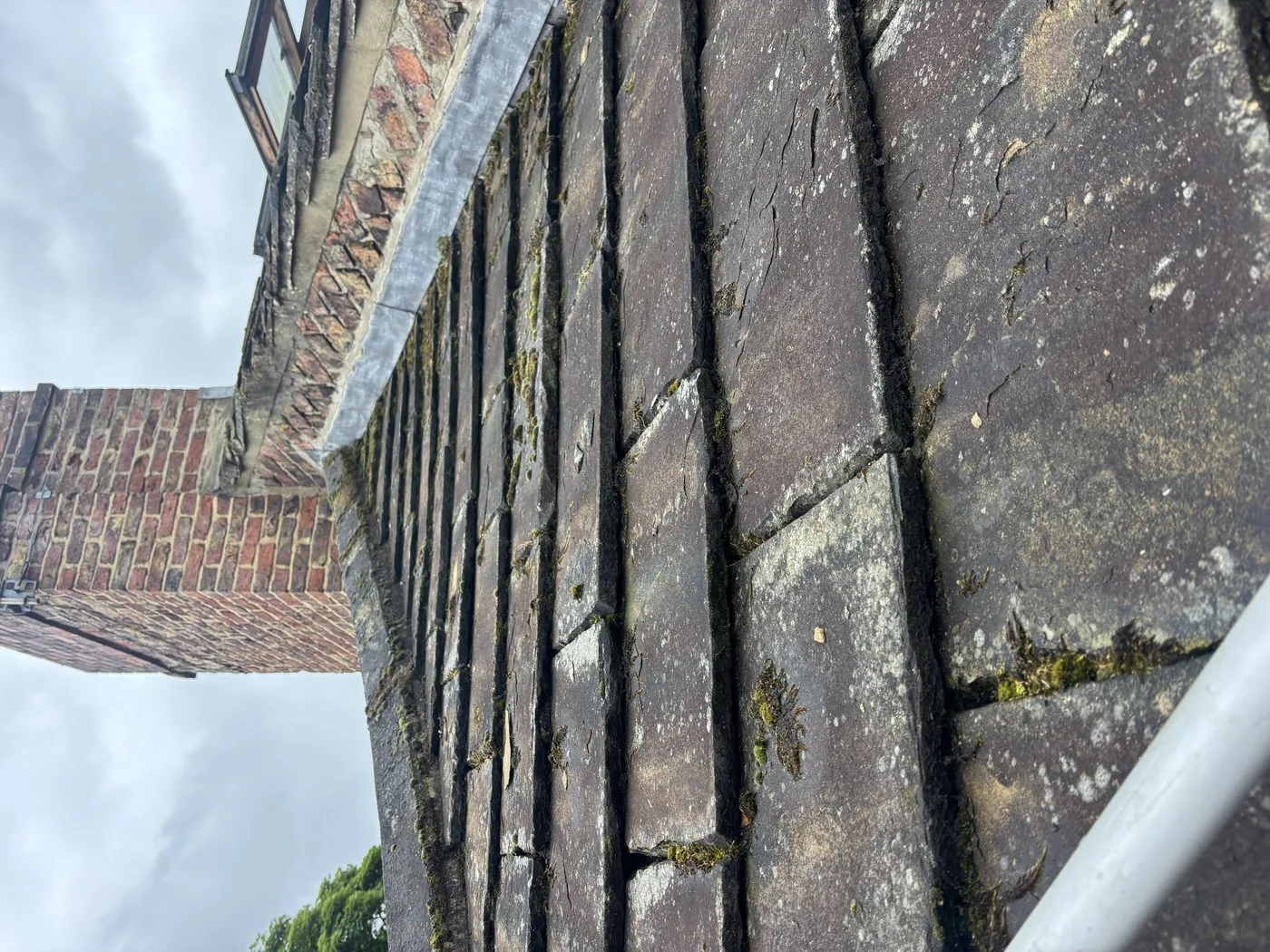
Every tile was treated individually with a wire brush — firm enough to remove the growth, but controlled enough not to abrade the stone beneath. It takes longer. There's no shortcut to it when you're doing it properly on a roof like this. The steeper pitches below the tree canopy required a roof ladder throughout.
Once the growth was cleared, BAC50 biocide was applied across the full roof surface.
BAC50 Over DDAC — Why It Matters on Listed Stone
Most biocides used in the trade are DDAC-based. They work well on concrete and fibre cement tiles. But DDAC can cause discolouration on aged natural stone — it reacts with certain minerals in the surface and can leave staining that's difficult or impossible to reverse.
On a building where the original material is part of what makes it significant, that's too much of a risk. BAC50 gives strong biocidal protection — it kills off remaining spores and slows regrowth significantly — without any risk of staining the stone. It was the right product for this job.
The Result
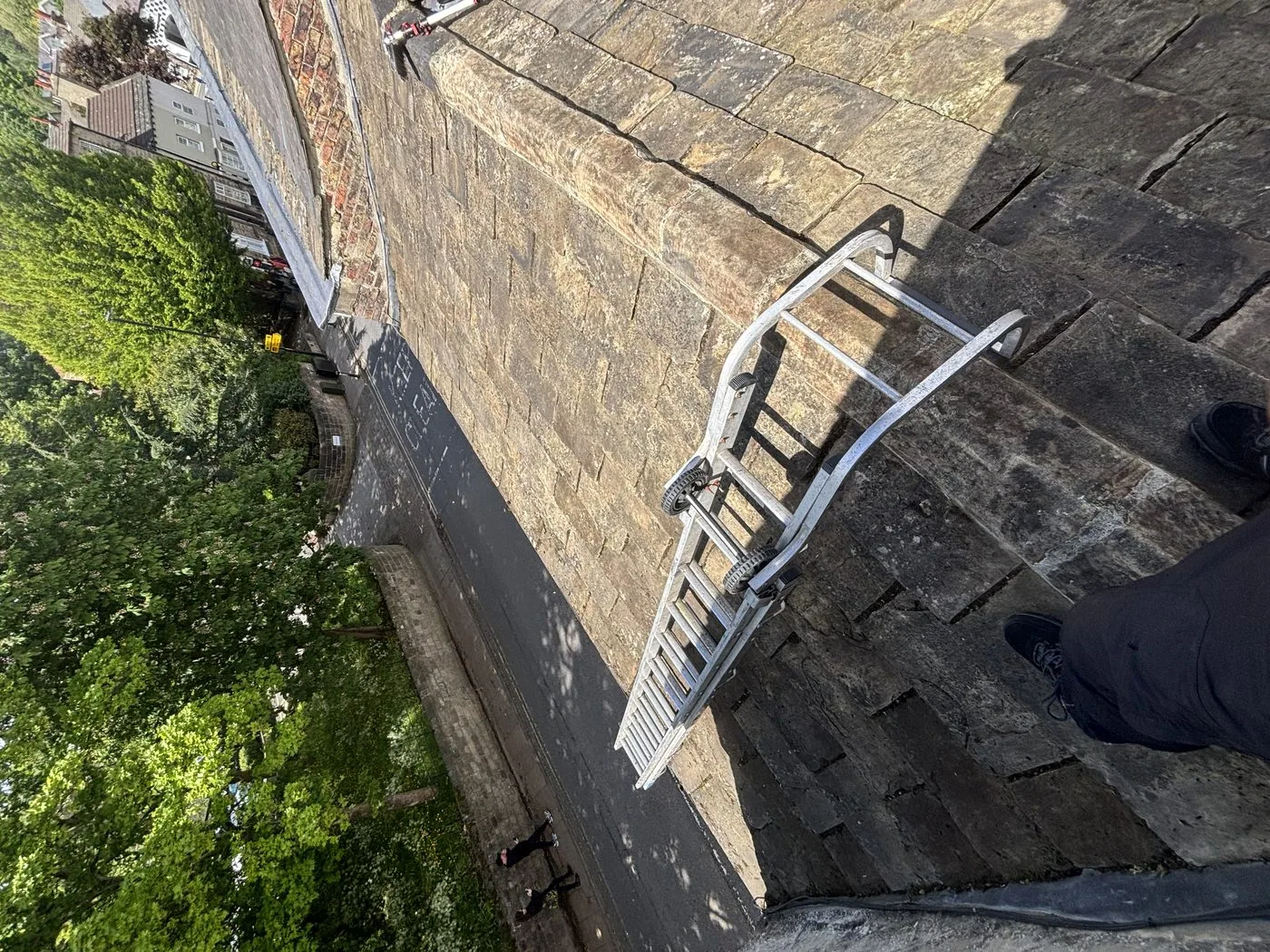
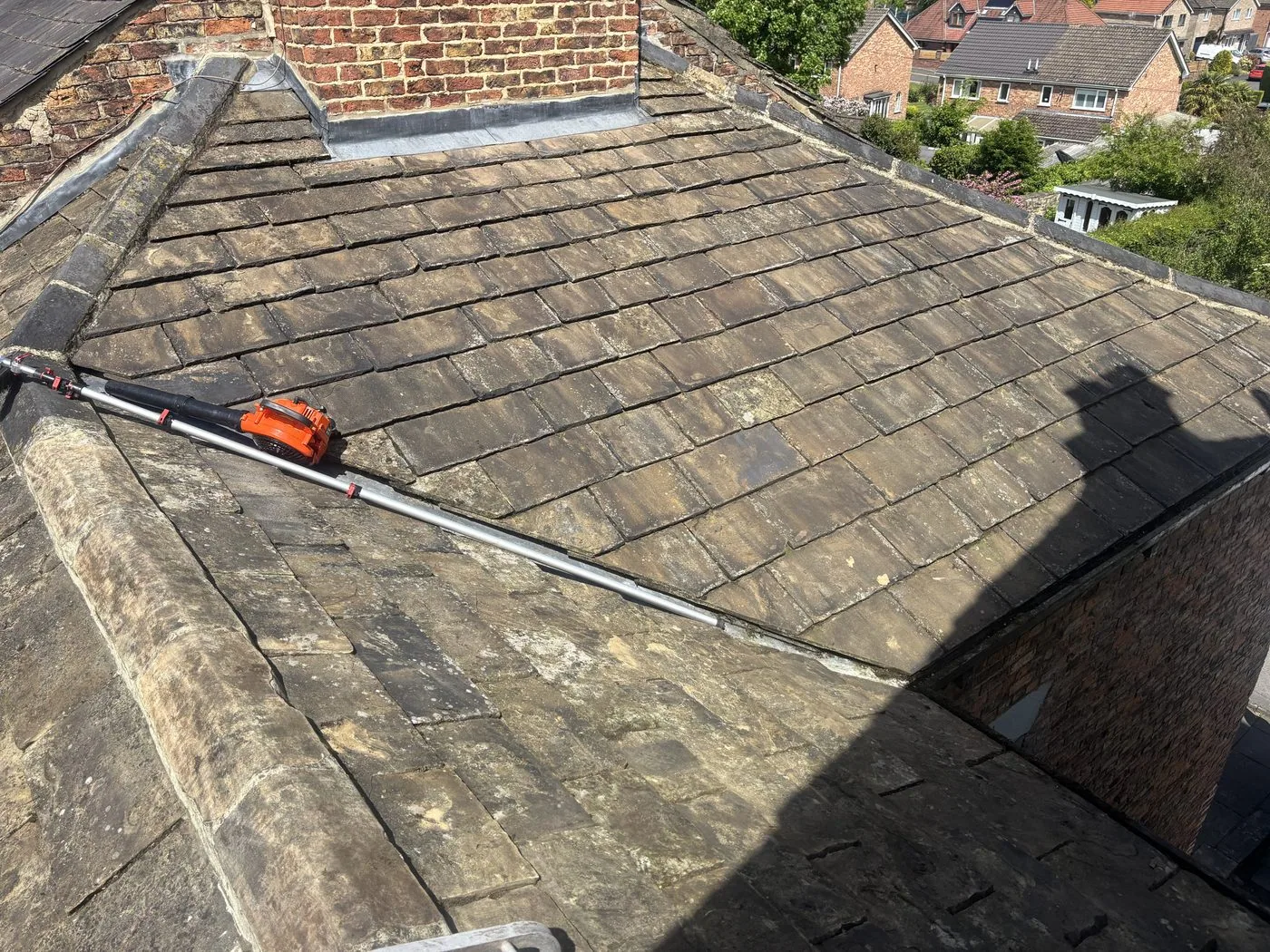
After: stone patina fully intact across the main roof — original character preserved.
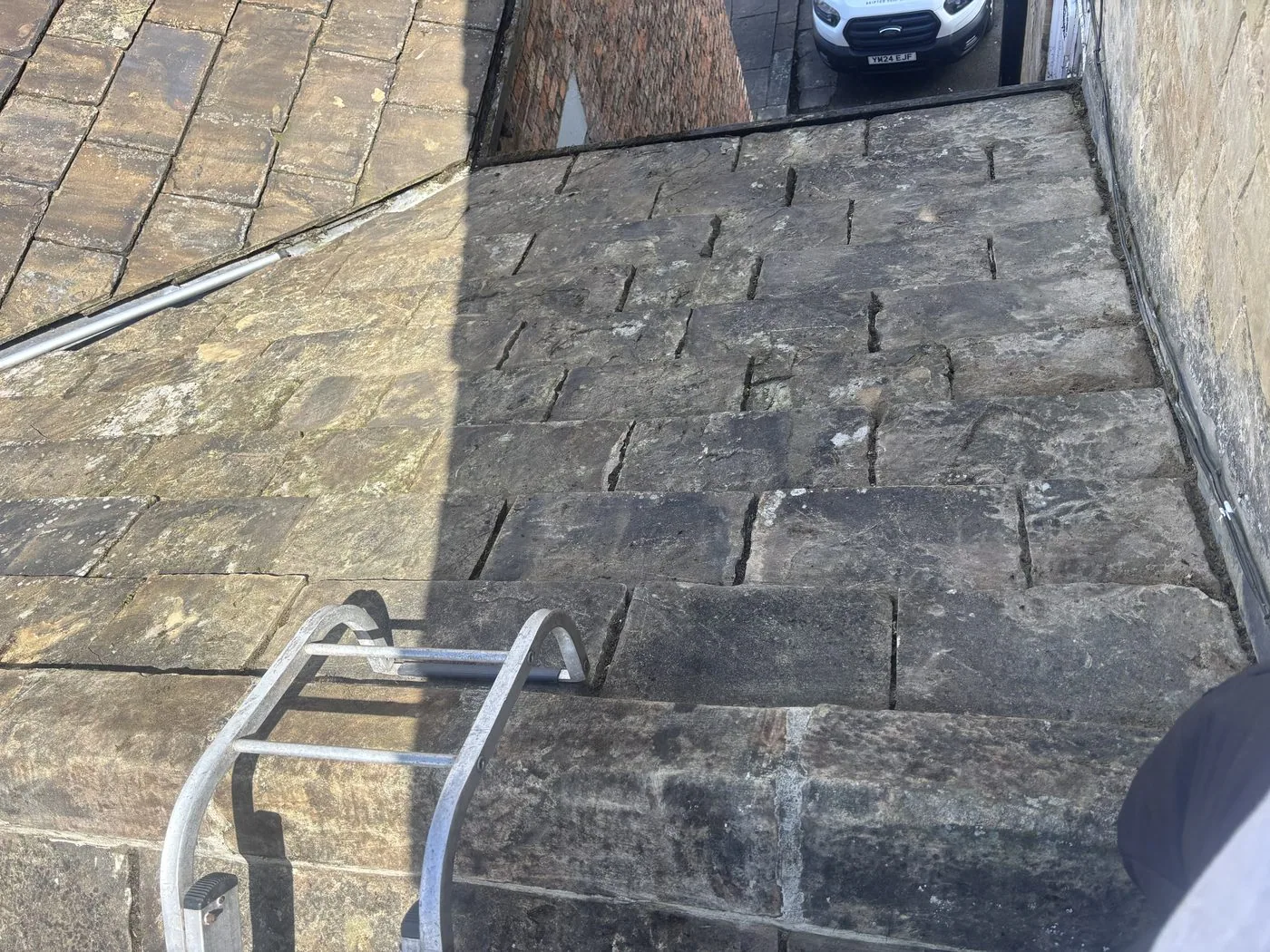
The original patina and stone character came through intact. All three sections of the roof — the main field, the vertical face on the shadier north side, and the steep section directly under the trees — cleaned up consistently. The stone surface itself is undisturbed; it's just the growth that's gone.
With biocide properly applied this time, recolonisation will be significantly slower than after the previous untreated scrape. A re-application every few years will maintain the barrier without any further disruption to the roof fabric.
If You Have a Listed Property in Yorkshire
Stone slate roofs are common across North Yorkshire — Knaresborough, Skipton, Harrogate, the Dales. If you've got one and you're not sure what approach is right, I'm happy to talk it through before you commit to anything. The wrong method on a listed building can cause real problems, and it's worth getting it right.
— Richard
Roof & Gutter Cleaning, Yorkshire
Got a stone slate or listed roof that needs attention? Get a free quote — I'll always tell you honestly what I think the right approach is.